Chargement...
Chargement...

Five bilateral tax treaties, one notable absence (USA-CI), four mandatory forms (2047, 2044, T1135, 8938): navigating the cross-border taxation of land investment in Ivory Coast from the diaspora. Educational guide, not personalized tax advice.
Need a land expert?
Speak with an advisor for free. Response within 2 hours.
⚠ Draft under legal review. This article consolidates official sources (BOFiP, Canada.ca, IRS, ESTV, DGI CI) but its legal complexity requires validation by an Ivorian tax lawyer + a US CPA/EA before any personal decision. The figures and mechanisms cited are indicative and subject to change. No personalized tax advice here. Always consult a qualified professional in your country of residence.
Standalone phrases, sourced, independently citable.
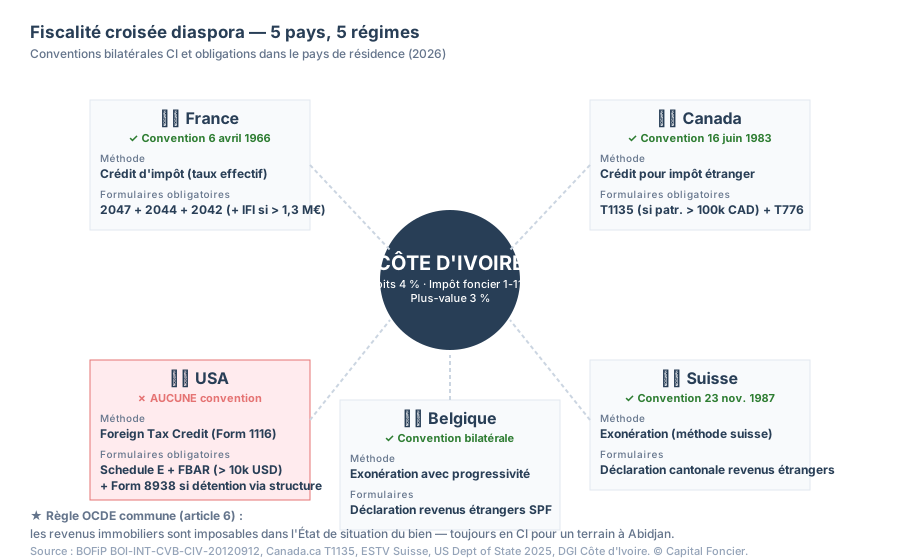
Investing in land or a building in Côte d'Ivoire from France, Canada, the United States, Belgium, or Switzerland involves cross-border taxation: two tax administrations involved, sometimes three, with double taxation elimination rules specific to each country. Four bilateral treaties exist (France 1966, Canada 1983, Belgium, Switzerland 1987) — none with the United States. On the Côte d'Ivoire side: transfer duties 4% at purchase, property tax 1% to 11% depending on property type, capital gains 3% flat rate. On the country of residence side: the French resident declares via Form 2047 + 2044, the Canadian resident completes the T1135 if foreign assets exceed 100,000 CAD, the American citizen combines Schedule E, Form 8938 and FBAR (for CI bank accounts). The pitfalls cost between €1,500 and $10,000 USD in penalties — and are prevented with a simple method.
| Indicator | Value | Source |
|---|---|---|
| Existing bilateral tax treaties with CI | 5 (France, Canada, Belgium, Switzerland + WAEMU multilateral) | BOFiP, Canada.ca, ESTV |
| USA-CI Treaty | NONE | US Dept of State, Investment Climate 2025 |
| Transfer duties at purchase (standard) | 4% of sale price | Article 760 CGI Côte d'Ivoire |
| Property tax on bare urban land | 1% market value | Tax Annex 2024-2026 |
| Property tax on income-producing built property (individual) | 9% | Tax Annex 2024-2026 |
| Capital gains on resale | 3% flat rate | DGI Côte d'Ivoire |
| T1135 declaration threshold (Canada) | 100,000 CAD | Canada.ca |
| IFI threshold France | 1,300,000 € net wealth | service-public.gouv.fr |
| Max T1135 penalty (gross negligence) | 2,500 CAD + 500/month | CRA |
Quick diagnostic block. Preparing a purchase from abroad? A Capital Foncier advisor guides you toward the appropriate cross-border tax verification for your country of residence. Get my diagnosis.
The Ivorian diaspora investing in the country often thinks of two things: land price and title security. Both dimensions are essential — we devote most of our articles to them. But a third component determines the actual performance of a project: taxation, in both countries simultaneously.
An investor who buys 30 million FCFA of land in Abidjan will:
Ignoring any of these components exposes you to penalties that can wipe out several years of returns. The key is understanding the architecture — not becoming a tax specialist.
| Country | Treaty Exists? | Legal Basis | Real Estate Income (CI Rental) | Capital Gains | Elimination Method |
|---|---|---|---|---|---|
| France | Yes | Treaty of April 6, 1966 + amendments 1985 and 1993 | Exclusive taxation in CI | Exclusive taxation in CI | Tax credit ("effective rate") |
| Canada | Yes | Treaty of June 16, 1983 | Taxation in CI | Taxation in CI | Foreign tax credit |
| Belgium | Yes | CI-Belgium Treaty | Taxation in CI | Taxation in CI | Exemption with progressivity |
| Switzerland | Yes | Treaty of November 23, 1987 (RS 0.672.928.91) | Taxation in CI | Taxation in CI | Exemption (Swiss method) |
| USA | NO | — | Possible double taxation | Possible double taxation | Unilateral Foreign Tax Credit (Form 1116) |
Sources: BOFiP France-CI, Canada.ca, ESTV Switzerland, US Dept of State 2025.
Common OECD Rule (Article 6 of the OECD Model): real estate income is taxable in the State where the property is located. Côte d'Ivoire therefore systematically retains the primary right to tax income and capital gains from property situated on its territory. The country of residence then adjusts via tax credit or exemption.
Major change since 2024: the tax base is no longer rental value but the market value of the property (the price at which it could be sold on January 1). This reform increases the taxable base in most configurations.
| Property Type | Annual Rate 2026 |
|---|---|
| Bare urban land | 1% of market value (2-year exemption post-acquisition) |
| Income-producing built property — individual | 9% of rental value |
| Income-producing built property — legal entity | 11% |
| Non-income-producing built property (primary residence, vacant house) | 0.5% |
Diaspora Incentive 2026: the 2026 Ivorian Finance Law provides a 5% tax credit applicable over 5 years for the acquisition or construction of a first home valued at or below 40 million FCFA. Provision to verify with DGI at the time of acquisition.
Source: 2026 Tax Annex, DGBF.
Property tax on income-producing built properties (9%) serves as the primary taxation of rental income on the CI side in most individual configurations. It is calculated on the cadastral rental value, updated according to market value since 2024.
Frequent Pitfall: holding via an Ivorian SARL can trigger, for a US person, Form 5471 (Controlled Foreign Corporation) and potentially the GILTI regime — heavy obligations, annual compliance cost > $2,000 USD, $10,000 USD penalties if late.
Source: DGI Côte d'Ivoire, professional summaries.
Real estate income in CI is taxable in CI. France applies a tax credit equal to the French tax corresponding to this income (so-called "effective rate" method). Result: the income enters the calculation of the French average tax rate but is not double-taxed.
Worldwide assets are included in the tax base as soon as the household is tax-resident in France and net taxable wealth exceeds €1,300,000. Property in CI is included. The threshold applies to net wealth (after deduction of acquisition debts).
Real estate situated in CI is subject to Ivorian law (lex rei sitae). Heirs domiciled in France are subject to French inheritance tax on worldwide assets (Article 750 ter CGI France) with imputation of taxes paid abroad on foreign property.
Sources: BOFiP France-CI, Form 2047, service-public.gouv.fr IFI.
Tax on worldwide income. Foreign tax credit applicable to tax paid in CI, capped at the amount of Canadian tax corresponding to this income.
Source: Canada.ca — T1135.
American citizens and permanent residents (green card holders) are taxed on worldwide income — regardless of where they reside. No bilateral treaty CI-USA mitigates this rule. Double taxation is managed via the Foreign Tax Credit.
Holding via an Ivorian SARL triggers, for a US person, Form 5471 (Controlled Foreign Corporation) and potentially the GILTI regime (Global Intangible Low-Taxed Income) — complex obligations, annual compliance cost > $2,000 USD, $10,000 USD penalties if late.
Sources: IRS — Form 8938 vs FBAR, Bright!Tax — Foreign Real Estate under FATCA.
The Belgium-CI treaty exists. Real estate income in CI is taxed in CI. Belgium exempts it from Belgian tax calculation but includes it in the progressivity of the rate applied to other household income. Result: no double taxation but an impact on the average rate.
Treaty of November 23, 1987 (RS 0.672.928.91). Similar mechanism: exemption of CI real estate income from Swiss tax base, with reservation of progressivity in certain cantons.
Sources: ESTV Switzerland, SPF Finance Belgium.
No, if you declare correctly. Rental income is taxed in CI (9% property tax for an individual holding an income-producing built property) and declared in France via Forms 2047 and 2044. France applies a tax credit equal to the French tax corresponding to this income (the "effective rate" method) — the income enters the calculation of the French average rate but is not double-taxed.
Yes, if the total cost of your specified foreign property exceeds 100,000 CAD. The T1135 concerns foreign rental properties regardless of their actual use. Bare land intended for rental or resale is includable. Property for purely personal use may be excluded — the distinction is made with your accountant.
No, it does not exist. The US Department of State (Investment Climate Statement 2025) explicitly confirms this. American citizens and permanent residents investing in CI must use the unilateral Foreign Tax Credit (Form 1116) to avoid double taxation.
Yes. IFI concerns worldwide assets of French tax residents as soon as net taxable wealth exceeds €1,300,000. Real estate situated in CI is included at its fair value, less acquisition debts.
In Côte d'Ivoire, real estate capital gains are taxed at a flat rate of 3% — regardless of property type, regardless of holding period. Your country of residence then applies its own regime (foreign tax credit in France and Canada, Foreign Tax Credit in USA).
In principle, real estate held directly is NOT reportable on Form 8938. Only foreign financial assets appear there (bank accounts, securities, life insurance, interests in foreign entities). However, if you hold the property via an Ivorian SARL or SCI, the entity may be reportable — and potentially triggers Form 5471 (CFC). Case to examine with a CPA/EA before structuring.
The Belgium-CI treaty primarily covers current income. Successions are generally not covered by standard bilateral treaties. The CI property will be subject to Ivorian law (lex rei sitae), Belgian heirs will be subject to Belgian inheritance tax on worldwide assets — with imputations provided by Belgian law. A will drafted per EU Regulation 650/2012 can clarify applicable law. Cross-border notarial consultation is essential.
A Capital Foncier advisor guides you toward the appropriate cross-border tax verification for your country of residence. The diagnosis is free — it does not replace a tax specialist's advice, it tells you where to start.
Get My Free Diagnosis — 2 minutes to describe your project.
Written by Alain Kadio, founder of Capital Foncier SARL, from multiple jurisdictional official sources (BOFiP, Canada.ca, IRS, ESTV, DGI CI, OECD). Draft published for legal review before final version.
Initial publication (draft): May 2, 2026. Review planned: CI legal consultation + US CPA/EA before finalization.
This article is educational. International taxation depends on personal circumstances (residence, marital status, ownership structure). Before any investment, consult a tax lawyer or certified public accountant in your country of residence. Capital Foncier is not a tax advisor — we verify land documentation, not tax returns.
The Capital Foncier Team — Abidjan, Côte d'Ivoire
"Our mission is to secure every square meter purchased by our investors so that investment remains a pleasure."
Découvrez les terrains que Capital Foncier a vérifiés : titre publié, statut du lotissement contrôlé, et état domanial croisé.
Élargissez votre lecture avec d'autres facettes du foncier ivoirien.

Birth certificate extract, title deed, tax clearance, inheritance judgment: the real list of documents an Ivorian notary firm requires for a real estate sale, explained item by item — and what it means for a diaspora buyer.
Lire l'article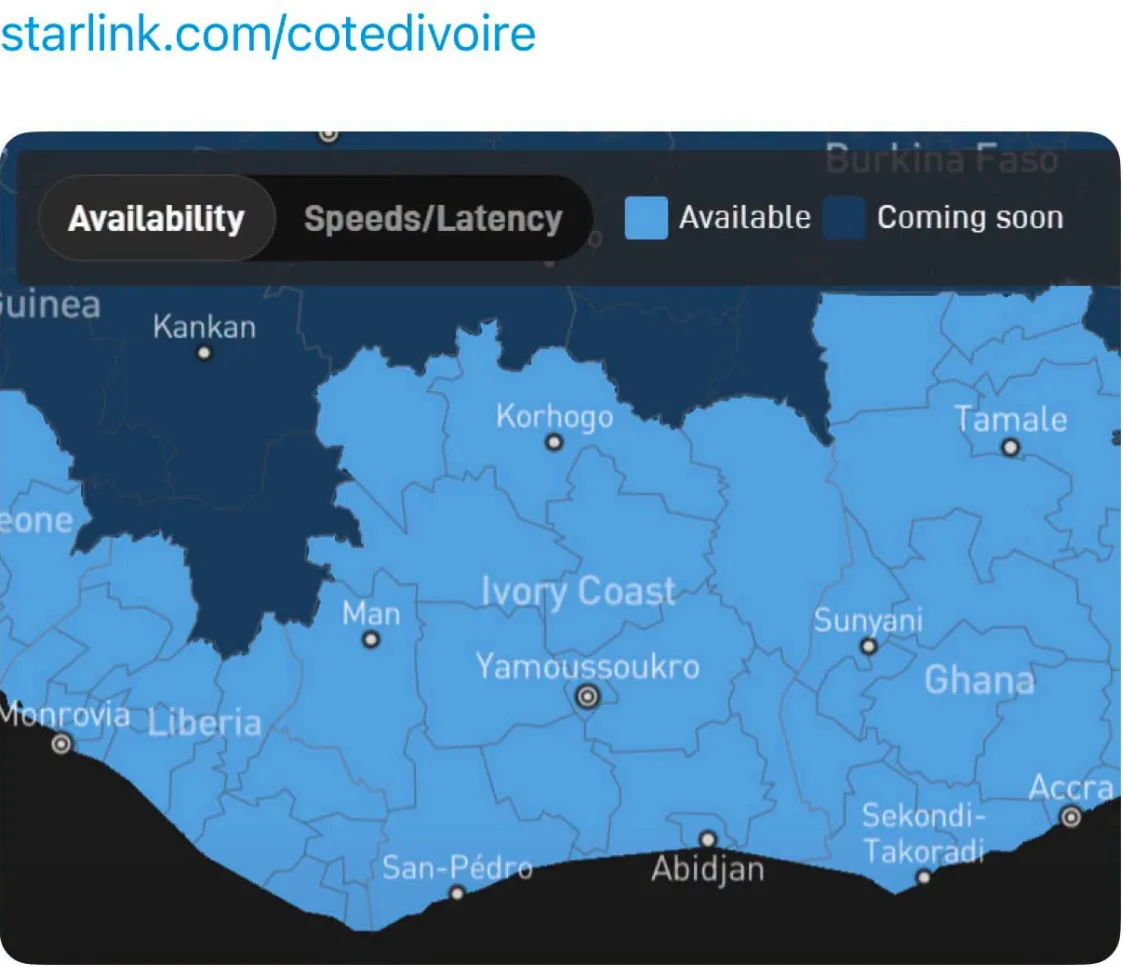
Starlink is now available for order in Côte d'Ivoire. Kit and subscription pricing, coverage map, and an honest comparison with CanalBox, Orange, and Moov fiber. How connectivity is changing land value.
Lire l'article
A real notarial invoice from Songon Audoin (500 m² at 15,000 FCFA/m²): 1,462,275 FCFA in fees for 7,500,000 FCFA of land, or 19.5%. A line-by-line breakdown, with every amount cross-checked against official regulations, and what this levy reveals about the development of unserviced areas.
Lire l'article