Buying in an Approved Subdivision in Ivory Coast: Risks, Verification Steps, and Procedures
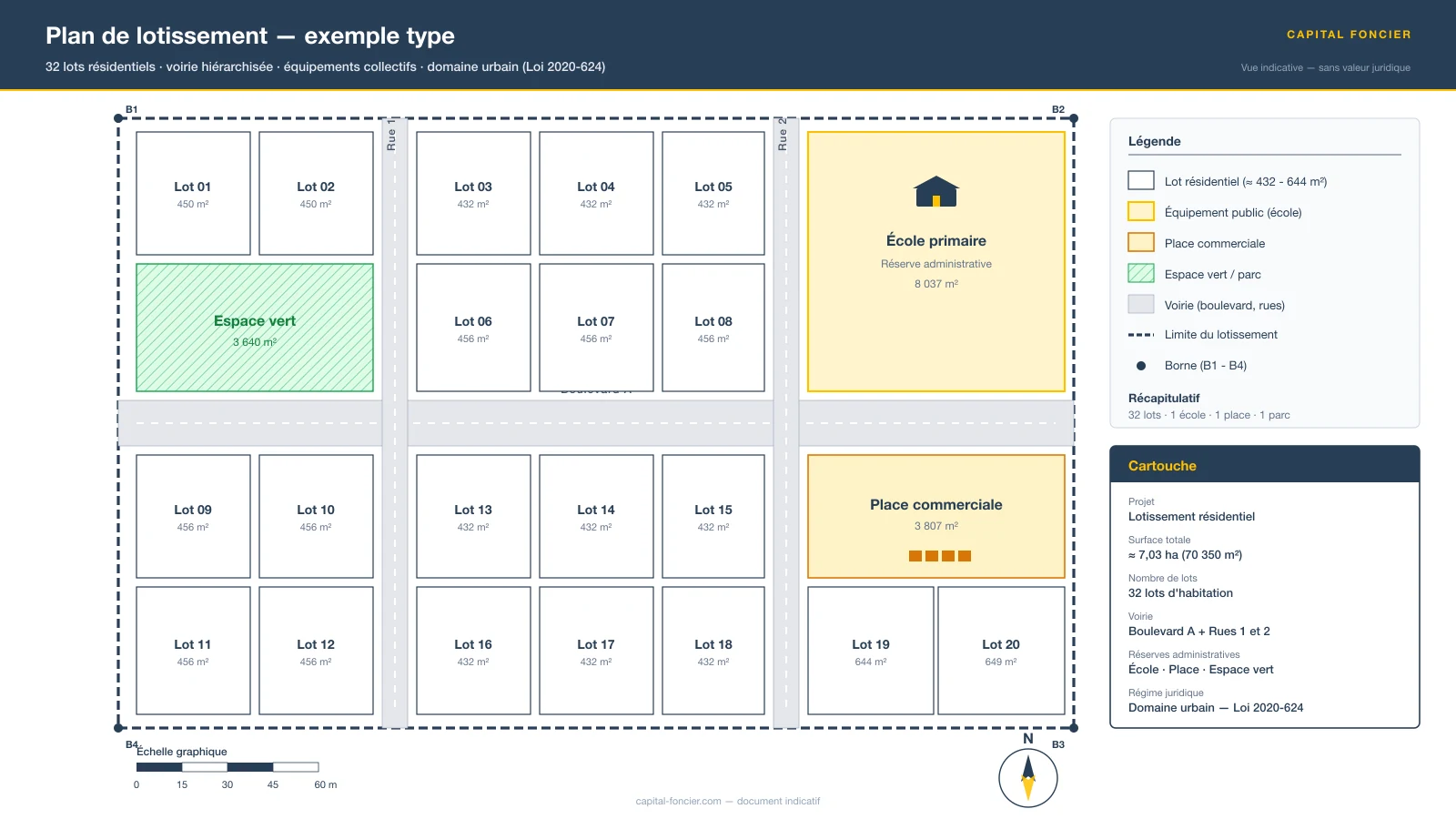
How to ensure that a vacant plot of land in Ivory Coast is located in a subdivision legally approved by the State to avoid land disputes and demolitions without compensation. Discover the essential technical and administrative checks before any purchase.
Need a land expert?
Speak with an advisor for free. Reply within 24 business hours.
A road bulldozed by a private party does not make a subdivision
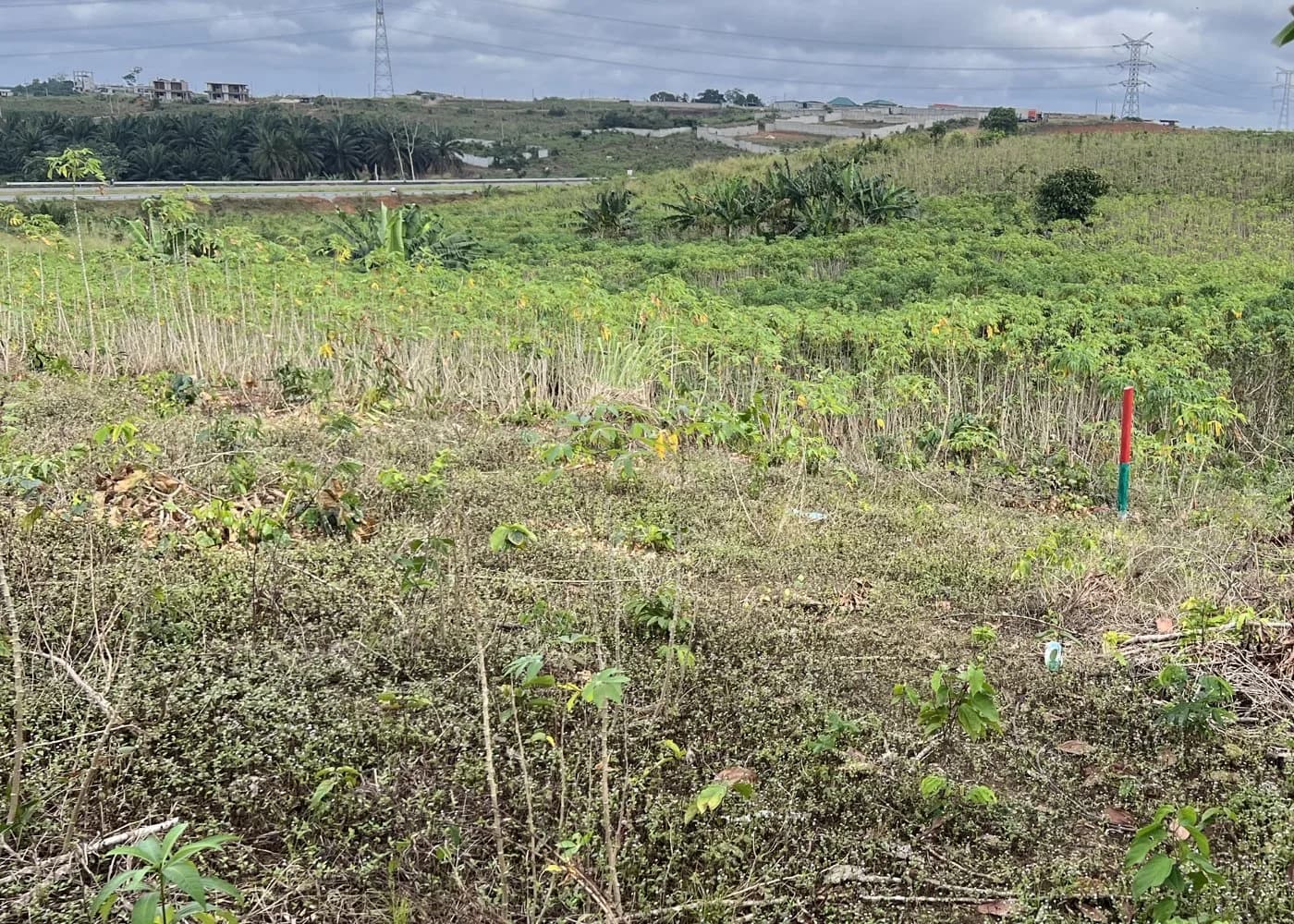
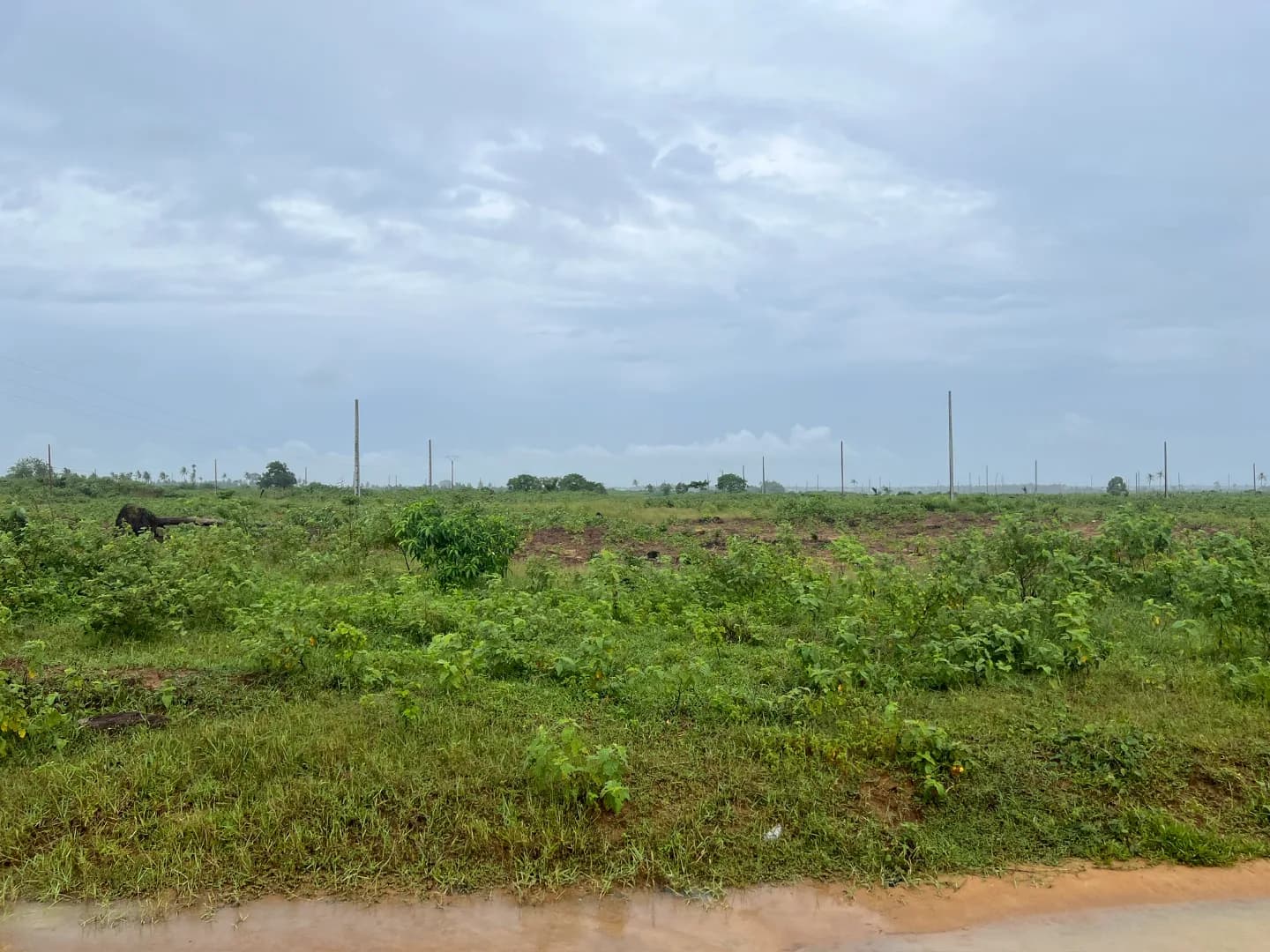
You spot a plot of land in Bingerville, along a recently opened road. The seller pulls out a printed subdivision plan with neatly numbered lots. He tells you that "everything is in order." The price is attractive. You're ready to sign.
Except that this road was traced by a private individual with rented equipment. The "subdivision plan" was drawn by an engineering firm, with no ministerial decree behind it. And the lots being sold correspond to no parcel recognized by the State.
This scenario repeats every week in Greater Abidjan. With urban sprawl toward Songon, Anyama, Bingerville, and Azaguié, landowners are carrying out wild subdivisions, that is, subdivisions with no legal existence. For the investor who buys in them, the consequence is immediate: no Definitive Concession Decree (ACD / Arrêté de Concession Définitive) procedure will succeed, and the land will remain in a legal void.
At the closing of the National Customary Land Use Certificate (ADU / Attestation de Droit d'Usage) Caravan in Man (August 1, 2025), the Minister of Construction said it again: "You must no longer buy a plot of land in a subdivision that is not approved."
What is an approved subdivision?
A subdivision is an urban development operation whose object or effect is the voluntary division into lots of one or more land properties, intended for residential use, industrial or commercial establishment, or any other socio-educational facility, with a view to sale (official definition, magazine BÂTIR N°004, Jan-Mar 2022).
Three officially recognized types of subdivision
The Ministry distinguishes three (BÂTIR N°004, 2022). The private residential subdivision is developed for a private party in an urban zone, to produce residential plots intended for sale. The village subdivision, also called rural, is most often carried out on unregistered land, for the benefit of one or more village communities. The administrative subdivision is initiated by the Sub-prefect or the Mayor.
In all cases, for a subdivision to have legal existence, it must be approved by decree of the Ministry of Construction, Housing and Urban Planning (MCLU / Ministère de la Construction, du Logement et de l'Urbanisme).
The legal framework
The approval of subdivisions is governed by:
- Law No. 2020-624 of August 14, 2020 establishing the Code of Urban Planning and Urban Land Domain (articles 94 to 100)
- Law No. 2024-351 of June 6, 2024 amending the Code of Urban Planning
- Decree No. 2021-784 of December 8, 2021 on the organization of procedures for the development, approval, and application of subdivision plans
- Decree No. 0032 MCLU-CAB of July 5, 2022 on the regulation of authorization to subdivide
- Law No. 2019-576 of June 26, 2019 establishing the Code of Construction and Housing
What the approval decree validates is very concrete: the site plan, meaning the arrangement of lots, roads, and public spaces; urban conformity with the Master Urban Planning Plan (PUD / Plan d'Urbanisme Directeur) or the Urban Planning Master Scheme (SDU / Schéma Directeur d'Urbanisme, including the SDUGA for Greater Abidjan on a 2030 horizon); the land reserves set aside for schools, health centers, and green spaces; and finally the water, electricity, and sanitation networks.
Without this decree, the subdivision is anarchic. The word is the administration's own: the MCLU uses it to designate unauthorized subdivisions.
Source: construction.gouv.ci, database of subdivisions available since 1960.
The official procedure for subdivision approval
According to the Ministry (BÂTIR N°004, Jan-Mar 2022), the official procedure varies by type of subdivision.
Administrative or rural subdivision: 47 steps
The regulations provide for 196 calendar days.
The actors involved are, in order: Single Land Window (GUF / Guichet Unique du Foncier) → Directorate of Urban Planning (DU / Direction de l'Urbanisme) → Sub-Directorate of Prior Urban Planning Agreement (SDAPU / Sous-Direction de l'Accord Préalable d'Urbanisme) → Sub-Directorate of Urban Planning (SDPU / Sous-Direction de la Planification Urbaine) → Directorate of Topography and Cartography (DTC / Direction de la Topographie et de la Cartographie) → Sub-Directorate of Topographic Works (SDTT / Sous-Direction des Travaux Topographiques) → Cadastre → Certified Surveyor → Approved Urbanist → General Directorate of Urban Planning and Land (DGUF / Direction Générale de l'Urbanisme et du Foncier) → Service for Control and Production of Acts (SCPA / Service du Contrôle et de la Production des Actes) → Cabinet Director → Minister (signature, now electronic via SIGNE since January 2024) → public inquiry (Inquiry Commissioner 30 days + report 15 days) → Mixed Commission → DTC (numbering) → distribution to concerned services.
Private subdivision: 33 steps
The regulations provide for 105 calendar days, excluding the public inquiry.
Warning: these timelines are the ones set by the official texts of the Ivorian administration. In practice, they can run much longer, for reasons that are not always easy to explain: a correction demanded of the surveyor, oppositions, stays, back-and-forth between services.
Official fees (per lot, FCFA)
| Subdivision category | Official fees |
|---|---|
| Village Abidjan/Yamoussoukro (< 50 ha) | 200,000 |
| Village interior of country (> 50 ha) | 400,000 |
| Subdivision plan / regularization (interior) | 70,000 |
| Regularization | 100,000 |
| Private subdivision | 200,000 |
Source: Single Land Window (GUF), cited in BÂTIR N°004 (Jan-Mar 2022).
How to verify that a subdivision is approved
The fastest way: check our public dashboard of approved subdivisions.
It aggregates the data published by the Ministry of Construction, Housing and Urban Planning (MCLU) across the country, with search by municipality, filter by status (approved, suspended, cancelled), and a detailed sheet for each listed subdivision. The source data remains that of the MCLU. What we add is a search interface, regular updates, and the visualisation of critical statuses such as suspension and cancellation, which raw databases often leave invisible.
1. Demand the approval decree number
Every legal subdivision has a ministerial decree number. That number is your first filter. Ask the seller for it systematically: not a photocopy of the plan, the decree number itself.
Falsifications of subdivision plans are frequent. A well-printed plan with coordinates proves nothing without the corresponding decree.
2. Cross-check with official registers
The MCLU maintains a database of approved subdivisions since 1960, accessible via construction.gouv.ci. You can also verify with the Single Land & Housing Window (GUFH / Guichet Unique du Foncier et de l'Habitat), on 27 20 21 74 78.
For recent subdivisions, the Urban Land Integrated Management System (SIGFU / Système Intégré de Gestion du Foncier Urbain, Decree No. 2021-862 of 15/12/2021) lets you cross-reference cartographic data with administrative allocations.
3. Verify the IDUFCI of the plot
Since Decree No. 2019-221 of 13/03/2019, each urban plot is assigned a Unique Land Identifier for Ivory Coast (IDUFCI / Identifiant Unique du Foncier de Côte d'Ivoire). According to the Ministry (BÂTIR N°008, 2024), the 322,462 km² of Ivorian territory are now recorded in the IDUFCI register to within 1 meter. This register identifies plots; it does not confer a land title on them.
Verification platform: idufci.construction.gouv.ci
The IDUFCI serves to detect multiple sales, the same lot sold to several buyers, and to check that the plot is properly attached to a recognized subdivision.
4. Request a recent domain status certificate
The domain status certificate, also called the compulsory certificate, confirms that you are the applicant recognized in SIGFU and that the plot has not already been the subject of an earlier allocation.
| Element | Detail |
|---|---|
| Cost | 5,000 FCFA |
| Where | MCLU / Urban Domain Directorate |
| What it proves | The absence of prior domain allocation |
Source: servicepublic.gouv.ci
5. New in 2025: the land position request
Since March 31, 2025 (MCLU Newsletter, August 2025), any ACD application must be preceded by a land position request at the Single Land Window. It is an extra step to build into your preliminary verifications.
The role of the certified surveyor: ground verification
An approval decree on paper is not enough. The physical reality of the land has to match the administrative documents, and that is the work of the certified surveyor registered with the Order of Surveyors of Ivory Coast (OGECI / Ordre des Géomètres-Experts de Côte d'Ivoire).
He goes down to the site with precision topographic instruments. First question to settle: do the physical boundary markers match the coordinates of the approved site plan? He then draws up a contradictory boundary demarcation report, signed in the presence of the neighbors, which sets out the exact limits of your plot.
That demarcation report is an indispensable document for the rest of the ACD procedure. Without it, your technical file will be incomplete.
His fee varies with area and location, generally between 150,000 and 500,000 FCFA for a standard urban lot. Insist on a surveyor registered with OGECI. An unapproved "topographer" cannot produce enforceable documents.
The concrete risks of an unapproved subdivision
Impossibility of obtaining the ACD
The ACD is the only act that confers ownership over the urban land domain. And the ACD application file at the GUFH requires land located in an approved subdivision. If the subdivision is anarchic, the file will be rejected, and you will be left with land without title.
Eviction without compensation
The Ivorian State regularly conducts eviction operations to clean up areas of illegal occupation. If you have built on or fenced a plot in an unapproved subdivision, and that plot sits on public land (a projected road, a power line, a flood zone), your structures will be destroyed without any compensation.
This is not a theoretical threat. Eviction operations in Abidjan affect hundreds of families each year who had invested in good faith in unregularized areas.
Conflicts between buyers
In an anarchic subdivision, nothing prevents the "subdivider" from selling the same lot to several people. Without IDUFCI, without registration in SIGFU, there is no technical mechanism to block multiple sales. And the first to discover the fraud is not necessarily the first to have paid.
Approved subdivision vs. anarchic subdivision: the differences
| Criterion | Approved subdivision | Anarchic subdivision |
|---|---|---|
| Legal basis | Ministerial decree (MCLU) | None |
| Site plan | Validated by urban planning | Drawn by a private party |
| Roads | Compliant with standards | Bulldozed |
| Public reserves | Provided (schools, health) | Absent |
| Access to ACD | Possible | Impossible |
| IDUFCI | Assigned | Not assigned |
| Risk of eviction | Very low | High |
| Resale value | Structured market | Very difficult |
The regularization procedure: possible but complex
If you have already bought in an unapproved subdivision, subdivision correction procedures exist. They consist of bringing the existing subdivision up to urban planning standards in order to obtain an approval decree after the fact.
Concretely, you need the agreement of every lot owner, the intervention of a certified surveyor to draw up a new compliant site plan, then validation by the MCLU of the roads, the reserves, and the facilities. The collective cost is significant: surveyor fees, technical file, taxes, to which are added 100,000 FCFA per lot in official regularization fees (BÂTIR N°004, 2022). On timelines, the official texts speak of several months; in practice, it is often several years.
This procedure is not always possible, particularly if the subdivision encroaches on public land or non-buildable zones. A preliminary assessment by a professional is indispensable.
Checklist before buying in a subdivision
- Request the approval decree number and verify it with the MCLU
- Consult the subdivision database on construction.gouv.ci
- Verify the IDUFCI of the plot on idufci.construction.gouv.ci
- Order a recent domain status certificate (5,000 FCFA at the MCLU)
- File a land position request (mandatory since 31/03/2025)
- Engage an OGECI certified surveyor for a site visit and a boundary demarcation report
- Check that the lot is not on public land or in a flood zone
- Make sure the roads and networks comply with the approved plan
Official sources:
- construction.gouv.ci, Ministry of Construction (MCLU), subdivision database
- servicepublic.gouv.ci, ACD and domain status sheets
- idufci.construction.gouv.ci, IDUFCI platform
- Ordinance No. 2013-481 of 02/07/2013, urban land domain
- Law No. 2019-576 of 26/06/2019, Code of Construction and Housing
- Law No. 2020-624 of 14/08/2020, Code of Urban Planning and Urban Land Domain
- Law No. 2024-351 of 06/06/2024, amending
- Decree No. 2019-221 of 13/03/2019, IDUFCI
- Decree No. 2021-784 of 08/12/2021, subdivision procedures
- Decree No. 2021-862 of 15/12/2021, creation of SIGFU
- Decree No. 0032 MCLU-CAB of 05/07/2022, authorization to subdivide
- Magazine BÂTIR N°004 (Jan-Mar 2022) and N°008 (Jan-Mar 2024), Ministry of Construction
- MCLU Newsletter N°028 (August 2025), National ADU Caravan
To go further:
- ACD, Land Title and Property Title Mutation Certificate: distinguishing the three
- ACD procedure: steps and documents
- The role of the certified surveyor and the boundary demarcation report
- Due diligence guide: verifying a subdivision
- Purging customary rights: official fee schedule
- The true cost of raw land
- Simulate your land fees
?Frequently asked questions
How many types of subdivision exist?+
Three official types according to the Ministry (BÂTIR N°004, 2022): the private residential subdivision, the village/rural subdivision, and the administrative subdivision (initiated by the Sub-prefect or the Mayor).
What are the official approval timelines?+
According to the official texts: 196 calendar days for an administrative or rural subdivision (47 steps) and 105 calendar days for a private subdivision (33 steps). In practice, these timelines can run much longer, for reasons that are not always easy to explain.
How do you know if a subdivision is approved?+
Ask the seller for the approval decree number and verify it with the MCLU via the GUFH (Tel: 27 20 21 74 78) or on construction.gouv.ci. The database of approved subdivisions has been maintained since 1960.
Can you obtain an ACD on land in an unapproved subdivision?+
No. The ACD can only be issued for land located in a subdivision regularly approved by ministerial decree. It is a prerequisite you cannot work around.
What are the risks of buying in an anarchic subdivision?+
Three main risks: the impossibility of obtaining an ACD, eviction without compensation if the land sits on public land, and conflicts with other buyers in the event of multiple sales.
What are the official subdivision fees?+
According to the GUF: 200,000 FCFA/lot for a village subdivision in Abidjan/Yamoussoukro (< 50 ha), 400,000 FCFA/lot for the interior (> 50 ha), 200,000 FCFA/lot for a private subdivision, 70,000 FCFA/lot for a subdivision plan or regularization in the interior, and 100,000 FCFA/lot for a regularization.
What is the land position request?+
A mandatory preliminary step since March 31, 2025 (MCLU Newsletter, August 2025), before any ACD application. It is filed at the Single Land Window of the locality.
Can the village chief approve a subdivision?+
No. Customary leadership can attest to occupation or to customary rights on a plot, but the legal authority to approve a subdivision belongs to the State alone, via the MCLU. A village chief's stamp does not replace a ministerial decree.
Can an anarchic subdivision be regularized?+
It is possible in certain cases through a correction procedure, but it requires the agreement of all owners, the intervention of a certified surveyor, and validation by the MCLU. The process is long, costly, and does not always succeed.
Is IDUFCI mandatory to buy land?+
The IDUFCI (Decree No. 2019-221) is assigned to each plot in an approved subdivision. It is not a document you "obtain" but an identifier that exists in the system. Its absence for a given plot is a serious warning sign.