Subdivision Pre-Financing in Ivory Coast: Mechanism, Risks and Legal Framework

Subdivision pre-financing in Ivory Coast can give access to plots at cost price, but it remains the favorite playground of scammers. Discover how the mechanism works, its real risks, and the contractual framework that helps keep them under control.
Need a land expert?
Speak with an advisor for free. Reply within 24 business hours.
A real investment tool, often misunderstood
From Lyon, Montreal or Washington, you have heard about an operation that makes investors dream: financing a subdivision upstream, receiving lots at cost price, and reselling once the subdivision is approved by the Ministry of Construction. That is what subdivision pre-financing means.
On paper, the operation holds together. On the ground, it is one of the arrangements where diaspora investors most often lose their stake. The mechanism itself is not what fails. What fails is the structuring and the contract.
This guide explains how a legally framed pre-financing works, what the real risks are, and which verifications let you keep each stage under control. It is not about promising you an outcome: you and your advisors build your own analysis. Our role is to give you the right benchmarks.
What is subdivision pre-financing?
The principle
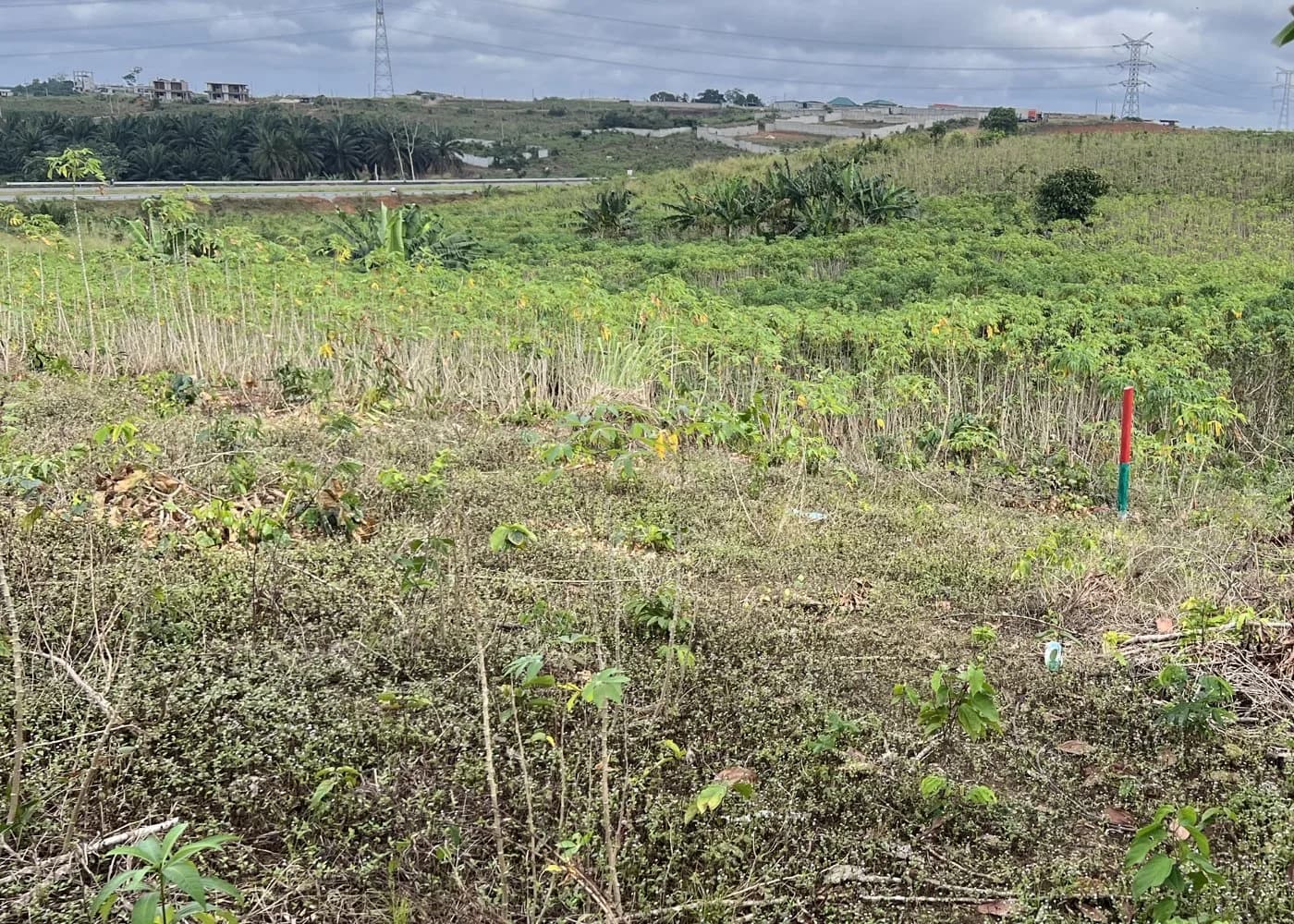
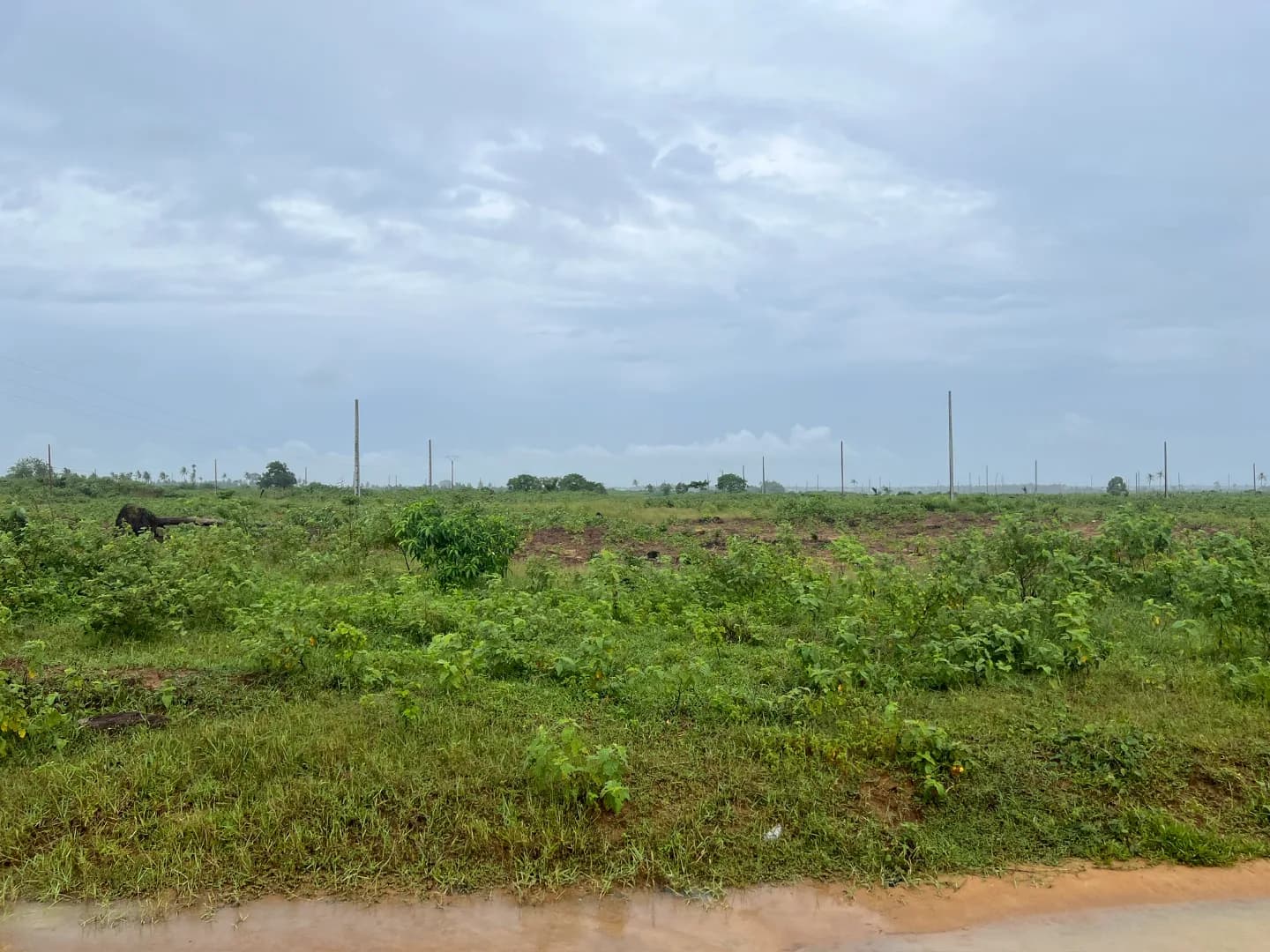
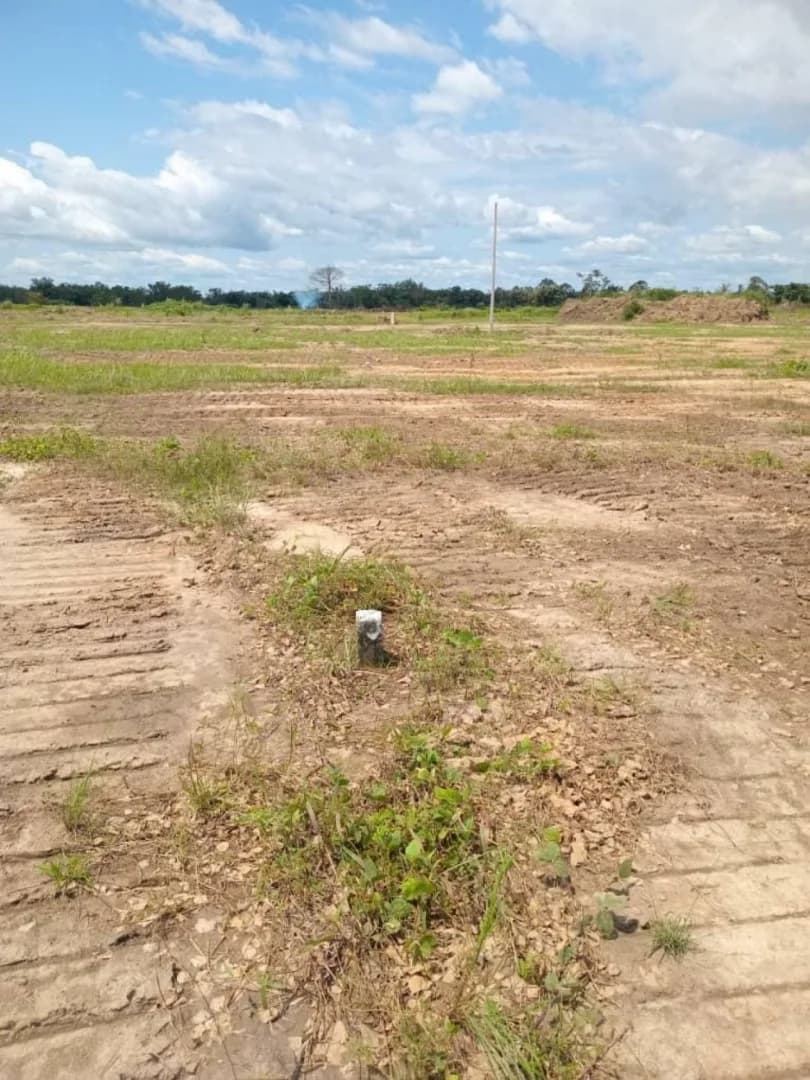
A landowner holds raw land, say 8 hectares on the outskirts of Abidjan, in a developing area such as Azaguié, Bonoua or Songon. He wishes to turn this customary land into a subdivision approved by the Ministry of Construction, Housing and Urban Planning (MCLU). The process is expensive: surveyor (registered with the Order of Surveyors of Ivory Coast (Côte d'Ivoire), OGECI), road opening works, technical file, administrative fees, purge of customary rights.
This is where the pre-financer comes in. He advances the funds needed for these steps and receives, in return, a number of lots at cost price once the subdivision is approved by ministerial order.
What pre-financing is not: the purchase of already-serviced land. It is an investment in an administrative process whose outcome is not certain and whose timeline is hard to predict precisely.
The applicable legal framework
The procedure for creating and approving a subdivision is framed by several fundamental texts:
- Law No. 2020-624 of August 14, 2020 establishing the Urban Planning and Urban Land Code (articles 94 to 100 for subdivisions)
- Law No. 2024-351 of June 6, 2024 amending the Urban Planning Code
- Decree No. 2021-784 of December 8, 2021 on the organization of procedures for drafting, approving and applying subdivision plans
- Order No. 0032 MCLU-CAB of July 5, 2022 regulating subdivision authorization
- Ordinance No. 2013-481 of July 2, 2013 relating to urban land (foundation of the ACD)
- Decree No. 2013-482 of July 2, 2013 on application modalities (financial conditions, deadlines)
- Decree No. 2019-266 of March 27, 2019 for the purge of customary rights (repealing Decree No. 99-594)
- Decree No. 2013-224 of March 22, 2013 amended by Decree No. 2014-25 of January 22, 2014 setting the purge schedule
Law No. 2020-624 lays down a rule every pre-financer must keep in mind: only lots from a subdivision duly approved by ministerial order can be the subject of a Definitive Concession Decree (ACD). Without an MCLU approval order, the lots have no legal existence, and the ACD procedure will be rejected at the Single Window for Land and Housing (GUFH, tel. 27 20 21 74 78).
Source: BÂTIR Magazine No. 004 (Ministry of Construction, Jan-Mar 2022)
The purge of customary rights: an unavoidable preliminary step
Before a subdivision can be approved on customary land, the State must have purged the customary rights, meaning it has compensated the holding village communities so that the land officially joins the urban land domain. Without a purge order, the subdivision cannot be approved.
A cardinal principle frames this stage (BÂTIR nos Villes No. 0001, 2018): only the State is empowered to purge customary rights. Private persons may carry out the purge solely under an agreement made with and on behalf of the State.
The official purge schedule (FCFA per m²)
According to Decree No. 2013-224 amended by Decree No. 2014-25:
| Geographic zone | Official rate (FCFA/m²) |
|---|---|
| Autonomous District of Abidjan | 2,000 |
| Autonomous District of Yamoussoukro | 1,500 |
| Regional Capital | 1,000 |
| Departmental Capital | 750 |
| Sub-prefecture Capital | 600 |
Source: Decree No. 2013-224 as amended, cited in BÂTIR nos Villes No. 0001 (Jan-Feb 2018)
Concretely, for a 5-hectare plot (50,000 m²) on the outskirts of Abidjan, the purge represents at least 100,000,000 FCFA (~152,000 EUR) in compensation for customary rights, with crop compensation on top (Ministry of Agriculture schedule). That amount is part of the total cost of creating the subdivision, and it must appear explicitly in the pre-financing agreement.
You can estimate your share of the purge with our purge calculator.
On purge deadlines: the texts set a deadline for each stage (identification, verification by the Village Rural Land Management Committee, negotiation, ministerial order). In practice, these deadlines can run much longer, for various reasons that cannot always be explained.
The subdivision approval procedure: 47 official steps
BÂTIR Magazine No. 004 (Ministry of Construction, Jan-Mar 2022) published the complete official procedure for approving a subdivision. For administrative and rural subdivisions, it comprises 47 steps and brings in around ten institutional actors. That complexity is something the pre-financer has to anticipate in his schedule.
The actors follow one another in this order: Single Window for Land (GUF) → Directorate of Urban Planning (DU) → Sub-Directorate for Preliminary Urban Planning Approval (SDAPU) → Sub-Directorate for Urban Planning (SDPU) → Directorate of Topography and Cartography (DTC) → Sub-Directorate for Topographic Works (SDTT) → Cadastre → Surveyor → Certified urban planner → General Directorate for Urban Planning and Land (DGUF) → Service for Control and Production of Acts (SCPA) → Cabinet Directorate → Minister (electronic signature via SIGNE since January 2024) → public inquiry (Investigating Commissioner 30 days + report 15 days) → Mixed Commission → DTC (numbering and distribution).
The official deadline is 196 calendar days under the texts. In practice it is often noticeably longer: delays in administrative processing are frequent and hard to anticipate precisely.
For private subdivisions, the procedure comprises 33 steps with an official deadline of 105 calendar days (excluding the public inquiry). The complete details appear in our dedicated article Buying in an approved subdivision: verifications and procedures.
What the SIGNE electronic signature changes
Since January 2024, ministerial signature of orders (ACD and subdivision approvals) has been electronic, through the SIGNE platform (DMISSA/MCLU + MFPMA). According to the Ministry (BÂTIR No. 008, Jan-Mar 2024), the signing pace has gone from ~1,000 to 2,000-2,500 acts per month. For the pre-financer, the Minister's signature is therefore less often the bottleneck, which does not erase the delays of the intermediate steps.
The actors in pre-financing
| Actor | Role |
|---|---|
| Landowner | Provides the raw land and the customary rights |
| Developer / technical operator | Drives the works and the administrative file |
| OGECI Surveyor | Produces the master plan, the boundary marking, the georeferenced coordinates |
| Investor (pre-financer) | Finances the procedures in exchange for lots at cost price |
| Notary | Drafts the agreement, manages the escrow, verifies the rights |
| MCLU / GUFH | Processes and approves the subdivision file |
The ADU: after the subdivision is approved, not before
The Attestation of Customary Right of Use (ADU) is not a prerequisite for the subdivision: it follows from it. The order is: approval of the subdivision, certificate of conformity, land titles created in the name of the State, then an ADU drawn up in the name of each customary rights holder on the list validated at a public meeting (the beneficiary of a compensation lot), who can then apply for the ACD. The ADU has been in force since July 1, 2024 and replaces the old village attestation, which had no recognized legal value. The Ministry of Construction draws up the ADU in the SIGFU, then the village chieftaincy hands it over to its beneficiary free of charge (MCLU, August 2024).
The ADU proves that customary rights on its beneficiary's lot have been purged. It does not confer ownership, but it opens the ACD application. At the pre-financing stage the subdivision is not yet approved: no ADU exists on the land, and an ADU presented for raw land is a warning signal.
In rural areas the regime differs: customary rights of use fall under Law No. 98-750 of December 23, 1998 (amended by laws 2004-412, 2013-655 and 2019-868). Article 8 bis (Law 2019-868) provides for contracting with non-Ivorian occupants in good faith. The ADU, for its part, does not apply there: it belongs to urban land tenure. Rural customary rights are recorded through the land certificate, via AFOR; in areas covered by the PRESFOR programme (2024-2029, World Bank), certification of customary rights holders is covered by the programme.
The allocation key: a negotiated agreement, not a legal standard
No legal text sets the allocation of lots between the parties. It is a negotiated agreement. Common practice in Ivory Coast:
| Party | Indicative share of lots |
|---|---|
| Landowner | 35 to 45% |
| Investor (pre-financer) | 25 to 35% |
| Developer / technical operator | 20 to 30% |
These percentages vary with who finances the road opening (the most expensive item), location, surface area, and negotiating power. An allocation key too favorable to the investor (more than 40%) can weaken the agreement: the owner risks feeling wronged and challenging it later.
The Integrated Urban Land Management System (SIGFU, Decree No. 2019-221) makes it possible to check in advance that the land is not encumbered by a prior allocation and that its IDUFCI (Unique Land Identifier of Ivory Coast) matches the documents presented. That verification happens before the agreement is signed. Platform: idufci.construction.gouv.ci. Further reading: SIGFU and IDUFCI: the Ivorian digital cadastre.
The real risks: what structuring lets you keep under control
1. The land does not belong to the person offering it
This is the most frequent risk. Customary rights to land are collective in Ivory Coast: they belong to a family, not to an individual. Someone presenting himself as "owner" or "family representative" may have no legitimacy at all.
Require the Family Council Minutes, signed by the members of the holding family before a recognized customary authority. Cross-check them with the village chieftaincy and, for rural areas, with the Village Rural Land Management Committee (CVGFR). The ADU cannot be used for this check: it is only drawn up after the subdivision is approved.
2. The subdivision is refused or blocked by the MCLU
A file may be rejected if the land sits in a non-buildable area (classified forest, public right-of-way, flood zone), if the master plan does not meet the urban planning standards of the Master Urban Plan (PUD), or if the land reserves (schools, health centers, green spaces) are insufficient. The refusal may be definitive (non-buildable area) or technical (corrections possible, but additional deadlines and costs).
A domanial status report (5,000 FCFA at the MCLU) and a SIGFU verification make it possible to detect urban planning incompatibilities before investing.
3. Funds are diverted before work begins
Without notarial escrow, nothing prevents the developer from using your funds for other purposes. The classic scheme: the first payments serve to reimburse other investors, and the works on your subdivision never begin.
Notarial escrow is your main protection: funds are released to the operator only on validation of stages that the contract defines and that can be verified.
4. Family conflicts block the project
A member of the holding family who was absent from the Family Council can challenge the agreement years later. These intra-family conflicts regularly block subdivisions in Ivory Coast, particularly in the expansion areas of Greater Abidjan (Songon, Bingerville, Anyama). Without solid Family Council Minutes and, where applicable, without a purge order, the risk of a late claim remains real.
5. The deadline stretches beyond all forecasts
The approval procedure involves 47 steps for an administrative or rural subdivision. A blockage can occur at any one of them: a surveyor's correction, an objection during the public inquiry, a stay for litigation, back-and-forth between services. Count between 12 and 36 months in normal conditions, and overruns are frequent.
A concrete example: Kouamé, Aïcha and the Azaguié subdivision
Here is a fictional scenario, built from real situations.
Kouamé, an Ivorian national residing in Paris, wants to invest in a land project back home. He is put in contact with Yao, who holds, with his family, a 6-hectare plot in Azaguié, a developing area on the Abidjan-Bassam axis. Yao wants to turn this customary land into a private subdivision.
Aïcha, a land advisor at Capital Foncier, assists Kouamé in his preliminary verification. The first steps reveal:
- The village chieftaincy recognizes the customary rights of Yao's family over the land. No ADU exists yet: it will only be drawn up after the subdivision is approved, in the name of the listed beneficiaries.
- The land position request (mandatory since 03/31/2025) confirms that no prior allocation encumbers the parcel.
- The SIGFU shows no overlap with public rights-of-way.
- The Family Council Minutes have been established with all rights-holders: two additional members were summoned after verification.
The agreement is signed before a notary, with a progressive disbursement schedule in 5 tranches tied to verifiable milestones: topographic survey validated, road opening completed, filing at the GUFH, Approval Order.
The total cost of the project is estimated at 28 million FCFA (~42,500 EUR). In return, Kouamé will obtain 8 lots of 400 m² each out of the 48 planned. The purge of customary rights is built into the budget (land in Azaguié, a departmental capital: 750 FCFA/m² under the official schedule).
After 22 months (official deadline: 196 days; ground reality: longer), the Approval Order is obtained. Kouamé then files the individual ACD applications for his 8 lots. The deadline for issuing the ACD on a lot from an approved subdivision is officially 180 calendar days at the MCLU (BÂTIR No. 004, 2022), excluding tax processing.
This scenario illustrates correct structuring. It does not prejudge the result: administrative, family and technical uncertainties are real. The objective is not to eliminate risk, but to keep it under control at every stage.
The ACD, the Land Title and the doctrine applicable to subdivision lots
Once the subdivision is approved and the lots allocated, the pre-financer files the individual ACD applications. What remains is to understand how the ACD and the Land Title fit together, two notions often confused.
The ACD (Definitive Concession Decree) includes the creation of the Land Title (TF). At step 3 of the official procedure, the Conservation of Land Property and Mortgages (CPFH) creates the TF in its register, before the ministerial signature. Publication in the Land Register (step 7) makes the TF enforceable against all, unchallengeable and imprescriptible. This is not a hierarchy of ACD against TF: it is the same legal act at two successive stages of the administrative circuit.
Foundations: Ordinance No. 2013-481, Decree No. 2013-482, Decree No. 2021-785, Law No. 2020-624, Law No. 2024-351.
For a detailed explanation: ACD, Land Title and CMPF: distinguishing the three.
On deadlines: the ACD on a lot from an approved subdivision has an official deadline of 180 calendar days at the MCLU (BÂTIR No. 004, 2022). In practice that deadline is often noticeably longer. It is not the ACD that "becomes" TF after that period: the TF is created during the ACD procedure, and publication finalizes a procedure already under way.
Essential contractual precautions
The notarial contract is non-negotiable
Any pre-financing agreement must be drafted and authenticated by a notary. Private agreements offer no serious protection in a dispute. The notary verifies the identity of the parties and the legitimacy of the rights, and gives the act a certain date.
Progressive conditional disbursement
Never pay out all of the funds at once. Notarial escrow is your best protection: funds are released to the operator only on validation of stages defined by the contract.
One possible schedule:
| Tranche | Contractual trigger | % of funds |
|---|---|---|
| 1 | Signing of agreement + escrow opened | 10% |
| 2 | Topographic survey validated by the OGECI | 20% |
| 3 | Road opening completed + contradictory report | 30% |
| 4 | Complete file submitted at the GUFH (receipt acknowledgment) | 20% |
| 5 | Approval Order issued by the MCLU | 20% |
Verify the technical operator
The developer must have a verifiable legal existence (RCCM, tax status certificate), work with a surveyor registered with the OGECI, and comply with the Urban Planning Master Plan applicable to the area (SDUGA for Greater Abidjan, horizon 2030).
The resolutive clause
If the Approval Order is not obtained within a defined deadline, the agreement must provide for a resolutive clause with restitution of the funds committed. The restitution terms must be explicit: scope, deadline, source of funds.
SIGFU and IDUFCI verification: the step many skip
The Integrated Urban Land Management System (SIGFU), established by Decree No. 2019-221 of March 13, 2019, allows cadastral data to be cross-checked against administrative allocations. According to the Ministry (BÂTIR No. 008, Jan-Mar 2024), the 322,462 km² of Ivorian territory is now recorded to the square meter in the unique identifier.
Before any financial commitment, verify the IDUFCI of the land on idufci.construction.gouv.ci. The absence of an IDUFCI on land that should have one is a serious warning signal. The SIGFU also helps spot multiple sales, meaning the same parcel sold to several pre-financers in parallel.
Legal structure: SCI or project SARL?
Beyond 20 million FCFA invested, setting up a dedicated structure can be appropriate. The SCI (Société Civile Immobilière, civil real-estate company) rather suits the individual investing alone: transparent taxation and flexible management. The project SARL (limited liability company) suits several investors coming in together, with limited liability and a commercial framework.
These structures protect personal assets and give notaries and administrative services a readable legal framework. Their creation must precede the signing of the pre-financing agreement.
The role of Capital Foncier in pre-financing
Capital Foncier is neither the developer nor the notary. In a pre-financing, your protection depends on what the notarial agreement provides: escrow with the notary, disbursement against verifiable milestones, and a resolutive clause with restitution of the funds committed.
We do not promise returns, and we present no increase in value as already earned. What we bring is rigorous structuring and systematic documentary verification, with transparency on every stage.
To understand our documentary verification process: Due Diligence Guide: how to verify a subdivision.
Official sources
- servicepublic.gouv.ci: ACD, domanial status, and CMPF information sheets
- construction.gouv.ci: MCLU, database of subdivisions approved since 1960
- idufci.construction.gouv.ci: IDUFCI / SIGFU Platform
- afor.ci: AFOR, CVGFR, rural customary rights
- Ordinance No. 2013-481 of 07/02/2013: urban land domain
- Decree No. 2013-482 of 07/02/2013: application modalities of Ordinance 2013-481
- Decree No. 2013-224 of 03/22/2013 amended by Decree No. 2014-25 of 01/22/2014: customary rights purge schedule
- Decree No. 2019-266 of 03/27/2019: customary rights, CVGFR, investigating commissioners
- Law No. 2020-624 of 08/14/2020: Urban Planning and Urban Land Code
- Decree No. 2021-784 of 12/08/2021: subdivision plan approval procedures
- Order No. 0032 MCLU-CAB of 07/05/2022: subdivision authorization regulation
- Law No. 2024-351 of 06/06/2024: amendment of the Urban Planning Code
- BÂTIR Magazine No. 001 (Jan-Feb 2018), No. 004 (Jan-Mar 2022), No. 008 (Jan-Mar 2024), Ministry of Construction
- MCLU Newsletter No. 028 (August 2025): ADU National Caravan
To go further:
- Buying in an approved subdivision: verifications and procedures
- ACD, Land Title and CMPF: distinguishing the three
- The purge of customary rights: official schedule
- ACD Procedure: steps and documents
- Due Diligence Guide: verifying a subdivision
- ADU: the customary right of use attestation
- SIGFU and IDUFCI: the Ivorian digital cadastre
- Building on your land: steps and authorizations
- Customary rights purge calculator
?Frequently asked questions
What is subdivision pre-financing in Ivory Coast?+
It is a land investment mechanism in which an investor advances the funds needed to turn raw customary land into a subdivision approved by the MCLU. In return, he receives lots at cost price. The mechanism is framed by Law No. 2020-624 (Urban Planning Code), Decree No. 2021-784 (subdivision procedures), and Ordinance No. 2013-481 (urban land domain).
What preliminary verifications are essential before signing?+
Five verifications cannot be skipped: (1) the landowner's customary legitimacy, recognized by the village chieftaincy (the ADU itself will only be drawn up after the subdivision is approved), (2) the land position request at the GUFH (mandatory since 03/31/2025), (3) SIGFU and IDUFCI verification on idufci.construction.gouv.ci, (4) the domanial status report (5,000 FCFA at the MCLU), (5) the Family Council Minutes.
How much does the approval of a subdivision cost?+
Official approval fees vary by category (source: Single Window for Land, BÂTIR No. 004, 2022): 200,000 FCFA/lot for a village subdivision in Abidjan or Yamoussoukro (surface area < 50 ha), 400,000 FCFA/lot for the interior of the country (> 50 ha), 200,000 FCFA/lot for a private subdivision. To these fees are added the costs of the surveyor (150,000 to 500,000 FCFA depending on surface area), the certified urban planner, the road opening, and the purge of customary rights (official schedule: 2,000 FCFA/m² in Abidjan down to 600 FCFA/m² in a sub-prefecture capital).
What is the actual time between the agreement and obtaining the lots?+
The official deadline for the administrative subdivision approval procedure is 196 calendar days under the texts (47 steps documented in BÂTIR No. 004, 2022). The official ACD deadline on a lot from an approved subdivision is 180 calendar days at the MCLU. In practice, count between 12 and 36 months from the agreement to obtaining the lots with ACD. Deadlines can be longer, and that has to be anticipated.
Can a diaspora investor pre-finance a subdivision from abroad?+
Yes, but without physical presence or a trusted representative on site, the risk is noticeably higher. Supervising the works, attending administrative meetings and verifying stages are hard to delegate without professional support. For diaspora investors, using an approved operator with notarial escrow is particularly important.
What is Capital Foncier's role in a pre-financing?+
Capital Foncier is neither the developer nor the notary: we check the documents and support you at every stage. In a pre-financing, your protection depends on what the notarial agreement provides: escrow with the notary, disbursement against verifiable milestones, and a resolutive clause with restitution of the funds committed. It is not a promise of return: we present no increase in value as already earned.