9 Collapsed Buildings in Abidjan: What Land Security Reveals
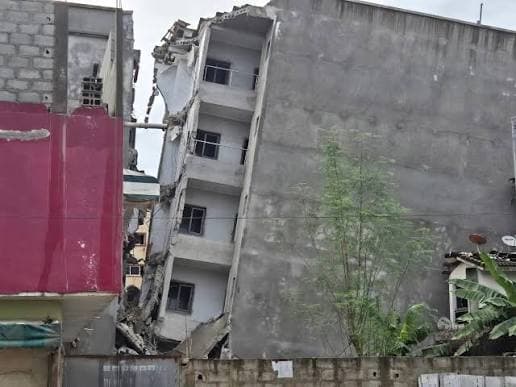
Between 2013 and 2018, 9 buildings collapsed in Abidjan according to official MCLU figures. Causes, reforms undertaken, and what this teaches investors.
Need a land expert?
Speak with an advisor for free. Response within 2 hours.
Nine. That is the number of buildings that collapsed in Abidjan between 2013 and 2018, according to figures published by the Ministry of Construction, Housing and Urban Development (MCLU) in the Construction Magazine N°000 (October-December 2019). One death. Two injured. These official figures describe a precise dysfunction, one the administration documented and then partially reformed.
For an investor considering land to build on, or an existing property to buy, those causes and the reforms that followed form a list of checkpoints that can be verified document by document. That is more useful than an alarmist narrative.
What the 2019 Ministry of Construction says
The MCLU's BÂTIR Magazine N°000 is the official source for this data. In it, the Ministry documents four main causes of building collapses.
The first is the absence of a building permit. Only 20 to 25% of constructions in the Abidjan District held a permit at the time of publication. Constructions without a permit escape prior technical verification by definition: plans checked, soil bearing capacity assessed, seismic rules respected.
The second is non-compliance with construction rules. Even among constructions that do hold a permit, some project owners or contractors ignore the technical requirements of the permit they were granted. Unauthorized structural modifications, extra floors that were never planned, savings made on reinforcement sections.
The third is poor material quality. Diluted cement, reinforcement bars of insufficient diameter or non-compliant aggregates weaken the structure invisibly, until a load or an external event causes failure.
The fourth is lack of knowledge of soil bearing capacity. Bearing capacity is the property of soil that defines the loads it can support without excessive deformation. In urban areas, and above all in low-lying zones and the former filled marshes of Abidjan (certain parts of Plateau, the southern municipalities), it varies and can be very low. Without a prior soil study, foundations cannot be dimensioned correctly.
The link between land security and construction safety
The title of this article deliberately associates collapses with land security. That link is structural, not rhetorical.
Land without a clear title is generally not declared to the tax administration, is not connected to official networks, and has not been the subject of a building permit application. The informal chain begins with the title and continues with the construction. An investor who buys on a village attestation (precarious, predating the reform) or on a private deed, formally prohibited since the Ordinance No. 2013-481 of July 2, 2013 and the Law No. 2020-624 of August 14, 2020 (Urban Code), will have far more difficulty obtaining a building permit than an investor holding a regular Definitive Concession Decree (ACD).
Securing the land title is therefore the precondition for legal, controlled construction. A regular title is the first link in the construction safety chain.
The 2016 reform: the Single Window for Building Permits
The building permit reform, which came into force on May 3, 2016, created the Single Window for Building Permits (GUPC), located at Deux Plateaux behind the BMW dealership in Abidjan. This window brings together under one roof the representatives of the administrations involved in processing a permit: urban planning, health, fire department, construction directorate.
The stated objective was to simplify the procedure, cut delays (20 days for the municipal procedure on residential buildings ≤ R+3, 30 days for the ministerial procedure), and make a permit easier to obtain, with an official total cost of 68,000 FCFA (18,000 FCFA in visas and 50,000 FCFA for the permit). For the detail of these procedures, read our article Building Permits in Ivory Coast (Côte d'Ivoire): Costs, Timelines and Penalties 2026.
Law 2019-576: penalize to deter
The Law No. 2019-576 of June 26, 2019 establishing the Building and Housing Code strengthened the sanctions regime for construction without a permit. These sanctions are of three kinds.
The financial penalty is calculated per square meter of floor area built without authorization: between 12,500 and 25,000 FCFA per m². For a single-family home of 150 m² of floor area, it can reach between 1,875,000 and 3,750,000 FCFA, fifty times the cost of the permit that should have been requested.
The criminal penalty provides for imprisonment of 1 to 6 months. It can be handed down by the criminal court independently of the administrative fine.
Demolition by the State, at the offender's expense, is the most radical sanction. It can be ordered for any construction erected without a permit or in flagrant breach of urban planning rules.
These sanctions also apply to the contractor (architect, technician) who directed the works without checking that the authorizations were in order.
The Compliance Certificate: the final step
Building with a permit is necessary, but not sufficient. The Compliance Certificate attests, at the end of the works, that what was actually built corresponds to the project authorized in the permit. Without this final check, a building permit proves what was planned, not what was built.
The Compliance Certificate is issued after a visit by a control officer or an approved inspection bureau. It is already mandatory for schools, where the Ministry of National Education requires it, and the reform was under way, at the date BÂTIR N°000 was published in 2019, to make it mandatory before connection to CIE networks under the SECUREL program.
For an investor acquiring an existing property, the absence of a Compliance Certificate is a signal to treat with attention: it means either that the construction was not inspected at completion, or that what was found at completion differed from the permit granted.
The technical control bureau
For constructions of a certain scale, using a technical control bureau (a private entity approved by the State) adds a layer of verification. The bureau intervenes at different phases of the project (checking plans, monitoring the execution of foundations, inspecting reinforcement before the concrete is poured) and issues a report attesting compliance with technical rules.
This recourse, not mandatory for every category of construction in 2019, is common practice in real estate projects of significant size. For an investor acquiring a new or recent building, asking for the technical control bureau's reports is a legitimate verification step.
What is a soil study?
Lack of knowledge of soil bearing capacity was one of the four causes the MCLU cited for the collapses of 2013-2018. A soil study, sometimes called a "geotechnical study", is an analysis of the land carried out by a geotechnical engineer, who takes samples at different depths and measures the mechanical characteristics of the soil. It allows the foundation dimensioning to be calculated for the loads of the planned construction.
In areas of Abidjan built on filled land, in low-lying zones or close to wetlands, a soil study is essential. Neighborhoods built quickly on formerly marshy ground, a reality in several municipalities of the District, present a particular risk.
For an investor undertaking construction, the soil study is an initial cost, a few hundred thousand FCFA depending on the scope of the project, and it protects against a risk whose consequences can be catastrophic.
What this teaches the land investor
The nine collapses documented by the MCLU are not an abstract statistic. They describe a causal chain in which each link can be addressed.
The first link is the land title. Land holding a Land Title (TF) published in the Land Register, or a regular ACD published in the Land Register by the Land Registry (General Tax Directorate, DGI), is land whose ownership is established in a documented way. On the exact relationship between ACD and TF, read our article ACD vs Land Title: The Official Truth from the Ministry and our glossary entry on the Definitive Concession Decree.
The second link is the building permit. A permit filed at the GUPC and approved by the competent authority attests that the project has been examined by the administrations concerned. It is the precondition for any legal construction.
The third link is site monitoring. An architect registered with the Order of Architects of Ivory Coast (OACI) and, where necessary, an approved control bureau watch over compliance with the approved plans and the quality of the materials used.
The fourth link is the Compliance Certificate. The inspection visit at completion closes the loop and documents that what was built corresponds to what was authorized.
An investor acquiring an existing property should ask to verify that these four links are documented. Their absence does not necessarily mean the construction is dangerous. It means that information on its construction quality is not available through official channels.
Land verification as prevention
Construction safety begins with land security. Land whose title is fragile (a private deed, a pre-2025 village attestation, a provisional concession deed that was never converted) is land on which the legal safety chain is hard to build. Regularizing the title is therefore the first form of prevention.
Several verification tools are accessible in 2026: the Identifiant Unique du Foncier de Côte d'Ivoire (IDUFCI) at idufci.construction.gouv.ci, the Système Intégré de Gestion du Foncier Urbain (SIGFU) at sigfu.gouv.ci, the domain statement (5,000 FCFA, MCLU) and the land statement (3,000 FCFA, Land Registry DGI). Together they allow a cross-check that was not possible with the same efficiency before 2021. An investor who uses them has documentary sources that nobody had to hand ten years ago.
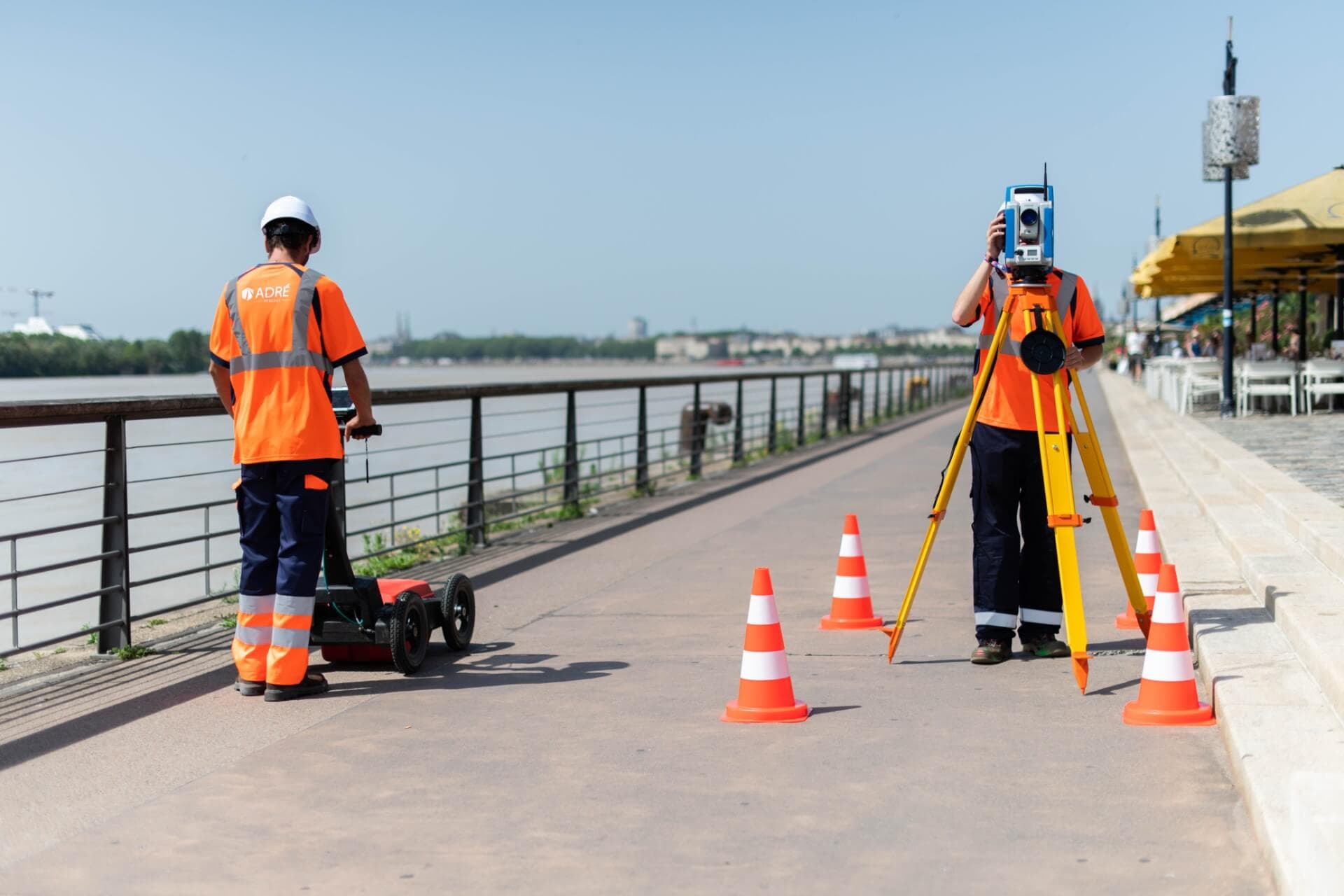
Capital Foncier is neither a technical control bureau, nor a surveying bureau, nor a public authority. Our role is to organize the documentary verifications of the land title, in coordination with approved professionals and the competent administrations, before any commercialization. Construction safety falls to other specialists (architects, control bureaus, geotechnical engineers) whom we can help you identify.
For any question on a specific land file, the official MCLU call center can be reached at 13 78 Monday to Friday from 8am to 6pm, and the official portal construction.gouv.ci centralizes the regulatory information available.
Would you like to verify the land title of a property before committing to a construction project? Our teams organize the preliminary documentary verifications for you. Schedule an appointment with Capital Foncier.
Primary source: BÂTIR Magazine N°000, October-December 2019, MCLU (Section 9, collapse statistics and building permits). Reference texts: Law No. 2019-576 of June 26, 2019 (Building and Housing Code), Decree No. 2019-594 of July 3, 2019 (building permits), Decree No. 2019-219 of March 13, 2019 (GUPC), Law No. 2018-868 of November 19, 2018 (architects), Ordinance No. 2013-481 of July 2, 2013, Law No. 2020-624 of August 14, 2020 (Urban Code).
Doctrinal note. ACD publication in the Land Registry: 180 official days (BÂTIR N°004, 2022), often longer in practice.