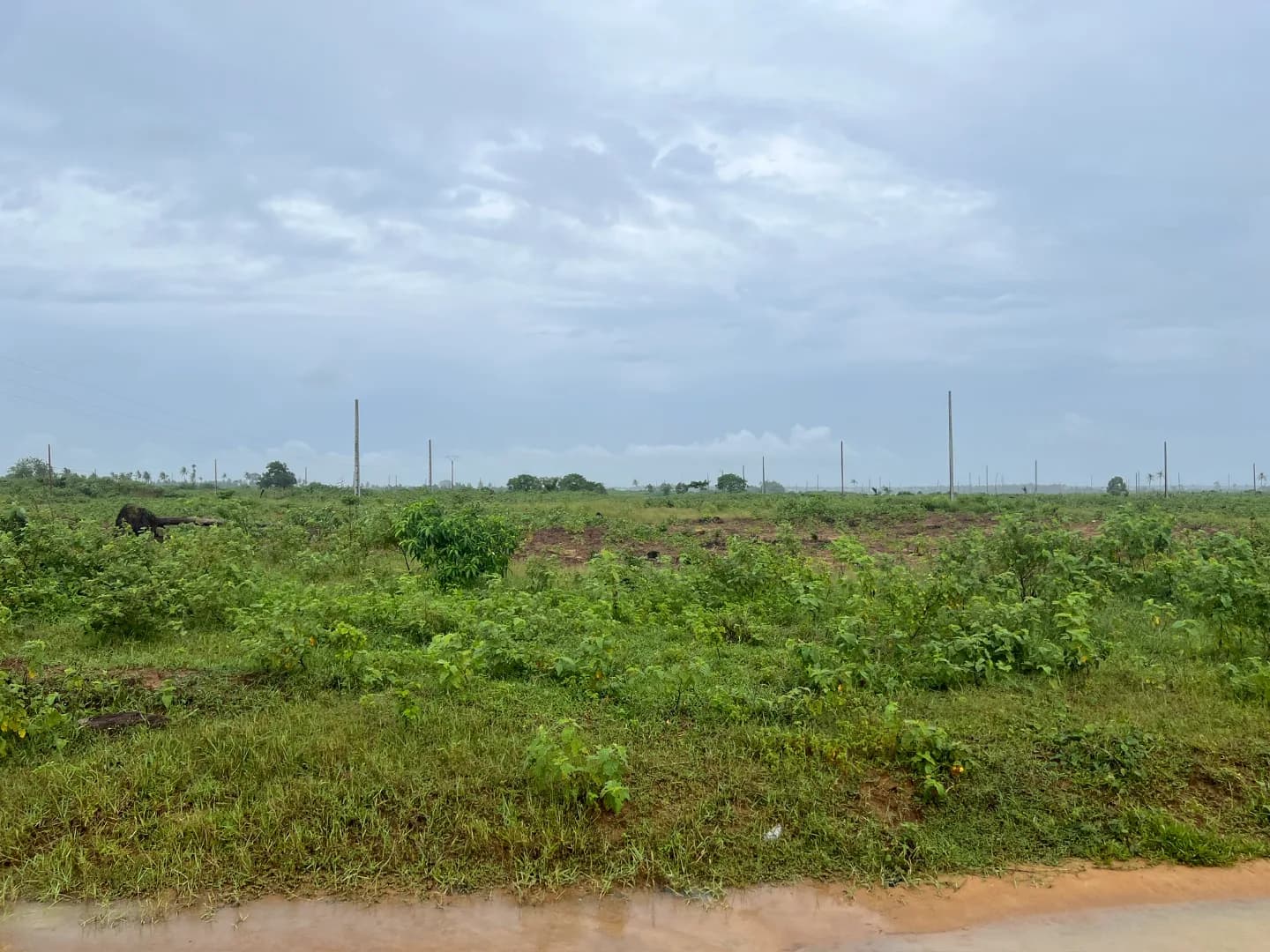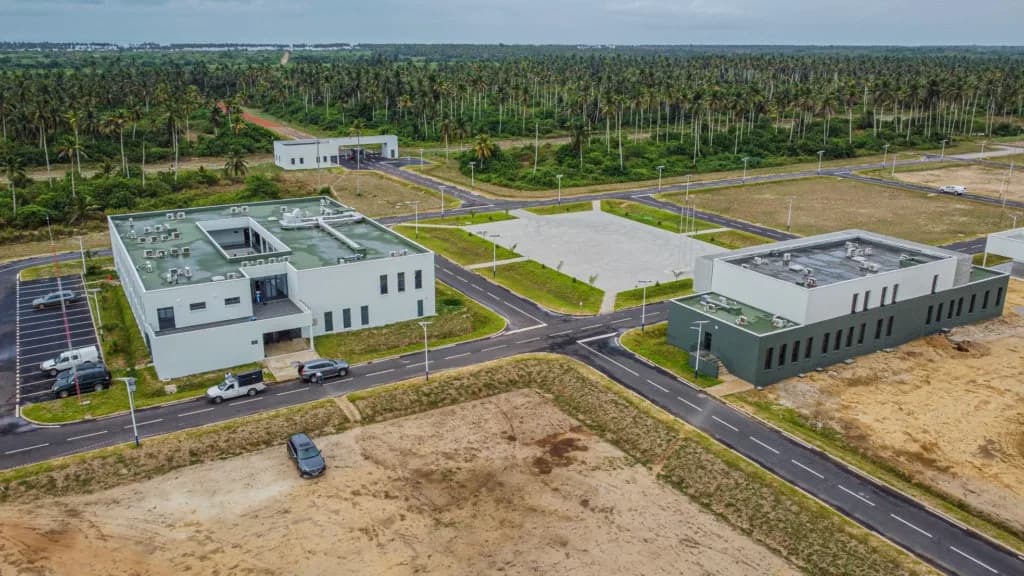
The 7 Pitfalls to Avoid When Buying Land in Abidjan

Double sales, forged documents, land unfit for building... Discover the 7 most common scams on the Abidjan land market and how to protect yourself.
Need a land expert?
Speak with an advisor for free. Response within 2 hours.
"The land is clean, you can sign with peace of mind"
That is the sentence you will hear most often. From the seller, from the middleman, sometimes even from a well-meaning relative. And in most cases, that confidence rests on a partial understanding of the land tenure situation, sometimes deliberately incomplete.
The Abidjan market is expanding. The urbanisation of Greater Abidjan is pushing prices upward, from Bingerville to Songon, from Anyama to Azaguié. This momentum attracts serious investors, but also organised networks that exploit the complexity of the land tenure system in Ivory Coast (Côte d'Ivoire).
Here are the seven traps we encounter most often in the files we review, and the concrete checks that allow you to rule them out.
Trap 1: The multiple sale, one plot sold to several buyers
How it works
A seller shows the same plot to two, three, sometimes four different buyers. Each one visits separately, receives copies of documents (never the originals), signs a private deed, and pays over the funds. The seller cashes in and disappears. The buyers discover the problem months later, often when they try to fence the plot or file an application for an ACD (Arrêté de Concession Définitive, the definitive concession order).
This scheme is made possible by the historical absence of a centralised registry. When a plot is not recorded in the SIGFU (Système Intégré de Gestion du Foncier Urbain, the integrated urban land management system), nothing technically blocks a second sale.
How to protect yourself
Start with the IDUFCI (Identifiant Unique du Foncier de Côte d'Ivoire, the unique land parcel identifier assigned to each plot): check it on idufci.construction.gouv.ci. If the parcel appears in the system, any prior transaction becomes visible.
Then request a recent domanial status report (état domanial), issued for 5,000 FCFA by the MCLU (Ministère de la Construction, du Logement et de l'Urbanisme, the ministry of construction, housing and urban planning). This is the document that shows whether an allocation is already recorded on the parcel.
Always go through a notary. The notary's role is precisely to verify the absence of any prior sale with the CPFH (Conservation de la Propriété Foncière et des Hypothèques, the land and mortgage registry), which keeps the Land Register (Livre Foncier). And never accept simple copies: insist on originals or certified true copies.
Sources: servicepublic.gouv.ci and idufci.construction.gouv.ci
Trap 2: The fake owner
How it works
An individual presents himself as the owner or the "family representative" for a plot that does not belong to him. He produces false documents: forged village attestations (attestations villageoises), sometimes identity papers in the name of a deceased relative. The price is often abnormally low, which pushes buyers to decide quickly.
Whether the parcel is of customary origin in a peri-urban zone or in a rural area, customary rights remain collective: they belong to a family, not to an individual. A single family member therefore cannot sell without the consent of the others.
A second mechanism is often grafted onto the first. After an initial payment, the seller comes back asking for "top-ups", presented as necessary to unblock the file with the administration or to persuade a family member who has stayed on the sidelines. These sums lead nowhere, because the problem is not administrative: the seller had no right to transfer the land on his own.
The warning signs
- The seller does not know the history of the plot or its exact boundaries
- The immediate neighbours do not recognise him
- He refuses thorough verification or rushes the signing
- He cannot produce Family Council Minutes (Procès-Verbal, PV, de Conseil de Famille)
How to protect yourself
Verify the seller's identity on his original National Identity Card (CNI), and cross-check it against the registers. Insist on the Family Council Minutes, signed by the members of the family holding the rights.
Have the CPFH check whether a Land Title (Titre Foncier, TF) already exists on the parcel. The DGI (Direction Générale des Impôts, the tax directorate) provides information on registration and transfer duties via dgi.gouv.ci.
Finally, question the immediate neighbours and the village chief. A site visit, with witnesses, remains essential.
Trap 3: Land that cannot be built on
The scenario
You buy a well-located plot at a good price. You start the ACD process. And you discover that the parcel is:
- in a flood zone, a frequent case in the low-lying areas of Cocody, Yopougon, and Abobo
- on the route of a planned infrastructure project (road, high-voltage line, bridge)
- in a public land reserve intended for facilities (school, hospital)
- in a non-building zone (zone non aedificandi), unbuildable by nature
In all these cases, the ACD will be refused. And if you have already built, you expose yourself to eviction without compensation.
How to protect yourself
Request a domanial status report from the MCLU: it reveals easements and allocations already recorded. Then check the Master Urban Plan (Plan d'Urbanisme Directeur, PUD) applicable to the area.
Visit the plot during the rainy season, between June and July. A low-lying area that takes on water shows itself at that time, not in February.
Also verify that the subdivision has been approved by ministerial order: this is the precondition for any ACD. The database of approved subdivisions can be consulted on construction.gouv.ci and goes back to 1960.
The special case of the ghost subdivision
One variant deserves to be known, because it has every appearance of legitimacy. A "developer" opens roads with a bulldozer, numbers the lots, prints a polished plan, and markets the parcels. The land exists, the boundary markers exist, the plan exists. But the subdivision has never received an approval order from the MCLU, so the lots being sold have no legal existence: no ACD can ever be obtained on them.
Ask for the number of the approval order, and have it verified at the ministry. A printed subdivision plan, however professional, proves nothing without its approval order.
Source: construction.gouv.ci, MCLU
Trap 4: The village attestation as the only document
Why it is a trap
For decades, the village attestation (attestation villageoise) was the only document available to formalise a land transaction. But it has never had legal value under Ivorian land law. Since July 1, 2024, it has been officially replaced by the ADU (Attestation de Droit d'Usage coutumier, customary right-of-use attestation), issued by the GUFH (Guichet Unique du Foncier et de l'Habitat, the one-stop land and housing office) of the MCLU. It has been issued free of charge since January 1, 2025.
A plot that has only a village attestation is at the very beginning of the securing process. Several steps, and several hundred thousand FCFA, separate you from an ACD.
What the village attestation does not protect against
- It does not block multiple sales
- It is not accepted by banks as collateral for a loan
- The plot can be claimed by the community or by other heirs
- It does not prove that the subdivision is approved
How to protect yourself
Never buy on the sole basis of a village attestation. If the plot has only this document, negotiate a price that reflects the cost and the risk of the registration procedure.
At a minimum, insist on a parcel located in an approved subdivision, with an ADU. And budget for the rest of the journey, ADU then ACD then registration as a land title: expect 100,000 FCFA per lot for an individual's ACD, plus surveyor fees.
Official timeframe: according to the Ivorian administration's own texts, 180 calendar days at the MCLU for an ACD on an approved subdivision (BÂTIR N°004, 2022), excluding processing at the tax office. In practice, the total time experienced is often longer. Note: the land title is created by the CPFH during the ACD procedure (official step 3), not after it. The ACD published in the Land Register is the published TF.
Source: servicepublic.gouv.ci, ACD costs
Trap 5: Hidden fees and progressive extortion
How it works
After the initial payment, the seller or middleman comes back with unexpected "additional fees": land release fees, transfer tax, a gift for the village chief, ministry file fees, a commission for the middleman's middleman…
Each new fee is presented as "the last step before finalisation". The buyer, who has already committed a large sum, keeps paying so as not to lose the initial stake. This mechanism has a name: escalation of commitment. The more you have put in, the harder it becomes to stop.
How to protect yourself
Insist on a detailed and complete cost estimate before any payment, with all fees listed in black and white. Route all payments through the notary, with no cash handed directly to the seller. Refuse any "last-minute fees" absent from the agreement.
And know the official costs: it is the only way to spot abusive mark-ups.
| Item | Official cost |
|---|---|
| ACD (individual) | 100,000 FCFA/lot + 1,000 FCFA/file + 50,000 FCFA |
| Domanial status report | 5,000 FCFA |
| Land status report | 3,000 FCFA |
| Land Ownership Transfer Certificate (CMPF) | 15,000 FCFA |
Source: servicepublic.gouv.ci
Trap 6: The ghost middleman
How it works
He presents himself well, has a WhatsApp number and photos of parcels, and speaks the language of the trade. You pay a deposit. He stops responding. This profile has no physical office, no trade register entry, no verifiable legal existence, and that is precisely what makes him untraceable afterwards.
The remote buyer is the natural target of this scheme, because they can neither drop by an office nor run into the middleman in the neighbourhood.
How to protect yourself
Insist on the RCCM number (Registre du Commerce et du Crédit Mobilier, the trade and personal property credit register), and verify it rather than simply reading it. Never pay other than by bank transfer to an identified account in the name of the entity you are dealing with: a cash payment or a transfer to a personal account leaves no usable trace.
If your contact presents himself as a developer, check that he appears on the official list of licensed developers published by the MCLU. Checking takes a few minutes.
One last sign, simple and reliable: a serious professional accepts that the transaction go through a notary. Anyone who tries to avoid it is telling you something about himself.
Trap 7: The non-conforming surface area
How it works
The deed states 400 m². The parcel actually delivered measures 310. Those 90 m² of difference have value, and they are very difficult to recover once the sale is formalised without boundary markers placed by a surveyor.
The case is frequent in subdivisions marketed off-plan, before the final boundary survey: the seller transfers a theoretical surface area, and the delivered surface area turns out to be smaller. The maths is quick. On a plot at 15,000 FCFA per square metre, 90 missing m² represent 1,350,000 FCFA. In the most expensive communes of Abidjan, the same surface area is worth several times that amount.
How to protect yourself
Obtain a joint boundary survey (bornage contradictoire), conducted in the presence of both parties, before paying the balance, not after. Entrust it to a chartered surveyor registered with the Order of Chartered Surveyors of Ivory Coast (OGECI), whose registration can be verified.
Have a surface area clause written into the agreement, providing for recourse if the discrepancy found at the boundary survey exceeds an agreed threshold. And never sign a deed bearing the words "approximate surface area" until the boundary survey has taken place.
Summary: the seven traps and the associated checks
| Trap | Key check | Where to check |
|---|---|---|
| Multiple sale | IDUFCI + domanial status report | [idufci.construction.gouv.ci](https://idufci.construction.gouv.ci) + MCLU |
| Fake owner | Family Council Minutes + Land Register check | CPFH, and [dgi.gouv.ci](https://www.dgi.gouv.ci) for registration |
| Unbuildable land | PUD + subdivision approval order | [construction.gouv.ci](https://www.construction.gouv.ci) |
| Village attestation alone | ADU + subdivision status | GUFH (Tel. 27 20 21 74 78) |
| Hidden fees | Complete cost estimate + payment through the notary | [servicepublic.gouv.ci](https://www.servicepublic.gouv.ci) |
| Ghost middleman | Verified RCCM + payment by bank transfer | Commercial court registry, and the [list of licensed developers](https://officielimmobilier.net/public/uploads/promo_list.pdf) |
| Non-conforming surface area | Joint boundary survey before the balance | Surveyor registered with OGECI |
The warning signs, across all traps
Certain situations should raise attention even when the file looks clean, because they appear in most of the schemes described above.
Artificial urgency first: "another buyer is interested, you have to decide today". A good plot does not disappear in twenty-four hours. Next comes refusal of the notary, when the seller tries by every means to avoid the notarised deed, and cash payment, which stems from the same reflex: leave no trace.
A price clearly below the local market calls for the same caution, because it almost always signals a problem with title, access, or occupation. Refusal of a site visit belongs on the list: there is always a reason why you cannot see the parcel. Finally, documents without a stamp, without a signature, or without a verifiable reference number are worth only the paper they are printed on.
If you have already been a victim
Acting fast matters, because bank trails and witnesses scatter.
- File a complaint at the police station or gendarmerie, and keep everything: documents, receipts, transfers, and SMS or WhatsApp exchanges.
- Engage a lawyer specialised in Ivorian land law.
- Alert the CPFH or the MCLU if forged documents are involved: reporting them may prevent their being used again.
- If you suspect a money laundering circuit, contact CENTIF (Cellule Nationale de Traitement des Informations Financières, the national financial intelligence unit).
A criminal complaint opens the way to a civil action for restitution. The outcome depends on how quickly you react and on the strength of the evidence gathered.
What has changed since 2024
Several recent reforms concretely change the checks that are possible, and it is worth knowing what they allow.
The ADU replaces the village attestation as of July 1, 2024, and has been issued free of charge since January 1, 2025. It falls under urban land tenure: it is issued by the GUFH of the MCLU, on subdivisions approved since 2023. Rural land follows a different chain, that of the Land Certificate issued through AFOR (the rural land agency), and the two do not overlap.
The SIGFU, established by Decree No. 2021-862 of December 15, 2021, relies on the IDUFCI, itself created by Decree No. 2019-221 of March 13, 2019. For registered parcels, the system blocks a competing registration, which makes multiple sales technically more difficult. Not all parcels are in it yet, so verification remains necessary.
The list of licensed developers is publicly available, and consulting it before paying anything costs only a few minutes.
These tools do not replace serious verification. They make it much easier to carry out.
Official sources:
- servicepublic.gouv.ci: ACD costs, CMPF, domanial status report
- construction.gouv.ci: MCLU, database of approved subdivisions
- idufci.construction.gouv.ci: IDUFCI platform
- dgi.gouv.ci: registration duties, transfer duties, and annual property tax
- Decree No. 2019-221, creation of the IDUFCI
- Ordinance No. 2013-481, urban land domain
- List of licensed developers, MCLU
- Order of Chartered Surveyors of Ivory Coast (OGECI), verification of boundary surveys
- Decree No. 2021-862 of December 15, 2021, creation of the SIGFU
Further reading:
- Land scams: the 5 traps to avoid at all costs
- Approved subdivision: checks and procedures
- The difference between the ACD and the land title
- Checklist: 10 documents to verify
- Our security protocol
?Frequently asked questions
What should I do if I have already been the victim of a land scam?+
File a complaint immediately at the nearest police station and take the matter to court. Keep everything: documents, receipts, SMS and WhatsApp exchanges, witness statements. A lawyer specialised in land law can assist you. Acting quickly changes a great deal, because bank trails and witnesses scatter over time.
Can a notary make a mistake or be complicit?+
It is rare but not impossible. The notary has a duty of verification and bears personal liability. Choose a notary registered with the Chamber of Notaries of Ivory Coast and check their references. In the event of professional misconduct, the notary is personally liable.
Does the SIGFU really block multiple sales?+
Yes, for plots that are registered in it. The block is technical and automatic, within the scope of the SIGFU (Decree No. 2021-862, which establishes the system; the IDUFCI identifier falls under Decree No. 2019-221). But not all parcels are in the system yet, as rollout is progressive. So always check on idufci.construction.gouv.ci.
How can I tell a good middleman from a fraudster?+
A serious middleman accepts that all transactions go through a notary, provides verifiable documents, and never rushes you. A fraudster demands cash payments, refuses verification, and manufactures a sense of urgency.
Are plots on the outskirts of Abidjan riskier?+
More often, yes. The outskirts are where urban sprawl, uncontrolled parcelling, and disputes between villages intersect. Verification there is all the more important.
Do these scams mainly target the diaspora?+
The diaspora is a prime target, because it buys remotely, is less familiar with official prices, and cannot always visit the parcel. Ivorian residents also fall victim: what protects you is not where you live, but verification.