Land certificate: the seven categories of land excluded from it, according to AFOR
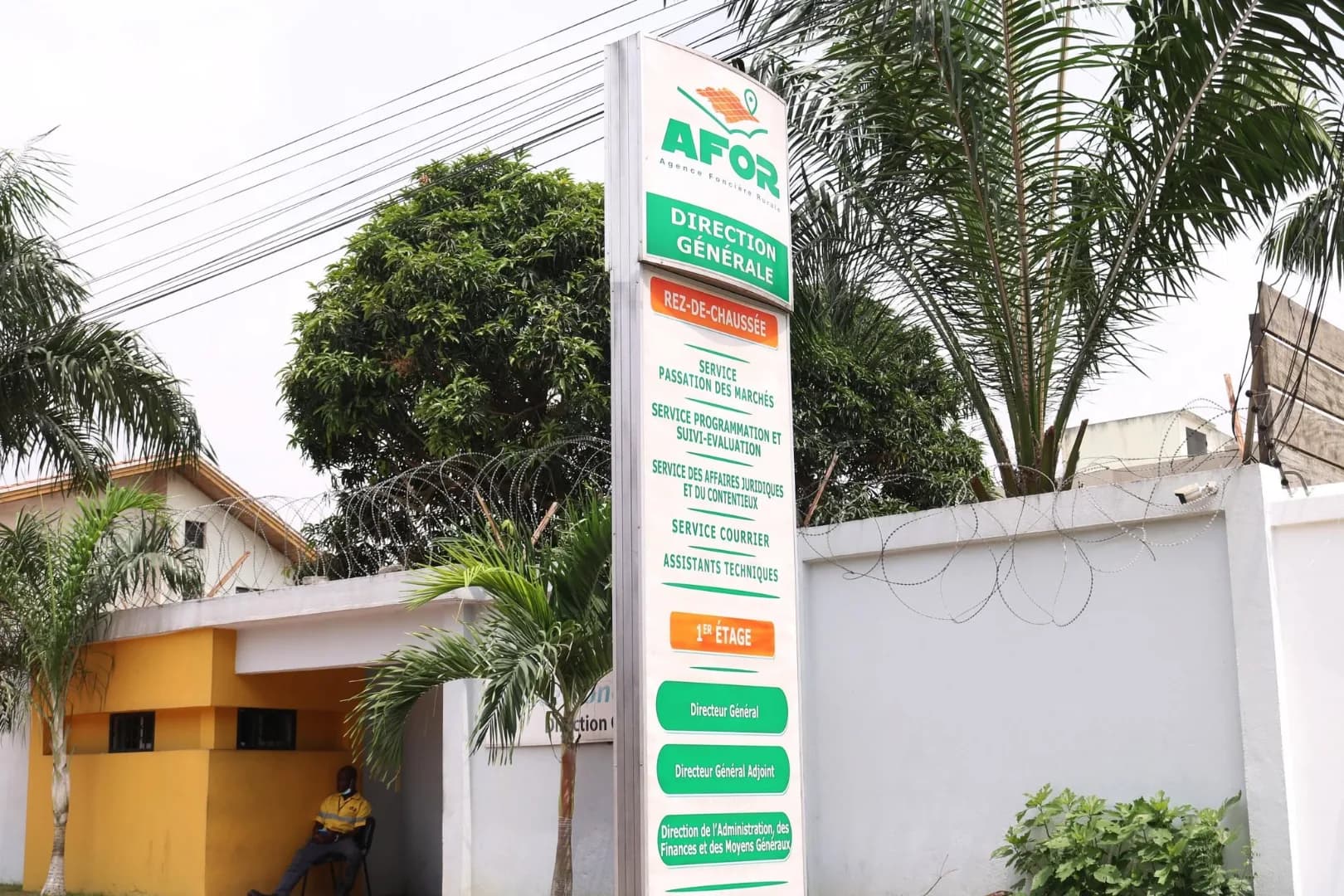
The Rural Land Agency (AFOR) reminds us that seven categories of land cannot be covered by a land certificate: public domain, urban perimeters, deferred development zones, classified forests and protected areas, tourist zones, granted land, and land already registered. Before any transaction, verify the legal status of the plot and the date the certificate was issued.
Need a land expert?
Speak with an advisor for free. Response within 2 hours.
The Rural Land Agency (AFOR — Agence Foncière Rurale), the public agency responsible for securing rural land tenure in Ivory Coast, published an explanatory post on its Facebook page: seven categories of land cannot be covered by a land certificate. The list directly concerns anyone considering buying a plot in a rural area, because a certificate issued on land that was not eligible for one does not protect its holder.
We set out here the seven categories as AFOR presents them, with a few pointers to situate each within Ivorian land law. We have also produced a short summary video, embedded at the end of the article.
The land certificate: a quick reminder
The land certificate records customary rights over a plot within the customary rural land domain, governed by Law No. 98-750 of 23 December 1998. It is not a definitive title of ownership: the certificate opens the way to registration of the plot, which leads to the land title (TF). The certification procedure is today managed with AFOR's support.
Two limits frame this mechanism. First, it applies only to land within the customary rural land domain: anything falling under another regime is excluded, and that is precisely the subject of the list below. Second, ownership of land within the customary rural land domain is reserved for Ivorian natural persons; foreign nationals may be recognised as good-faith occupants, without becoming owners (Article 8 bis of Law No. 98-750, inserted by Law No. 2019-868 of 14 October 2019).
The seven categories of land excluded from the land certificate
1. The public domain
These are lands and spaces assigned to public use or to a public service: roads, watercourses falling within the public domain, rights-of-way for certain public works. These spaces belong to the public domain of the State or of local authorities. They therefore cannot be the subject of a land certificate for the benefit of a private individual.
2. The urban domain
The land certificate concerns the rural land domain. Where land falls legally within an urban perimeter, it comes under the urban land regime, governed by Law No. 2020-624. An urban plot is therefore not secured by a land certificate. To situate this regime: in urban areas, securing tenure goes through the definitive concession decree (ACD — Arrêté de Concession Définitive) procedure; the land title (TF) is created during this procedure, and its publication in the Land Register makes it enforceable against all.
3. Officially constituted deferred development zones (ZAD)
A deferred development zone (ZAD — Zone d'Aménagement Différé) is an area delimited by the public authorities in anticipation of future development. The aim is to prevent land transactions from compromising the project planned for the area. Where a ZAD has been duly constituted, the land concerned is subject to a specific regime: it cannot be treated as ordinary customary rural land eligible for certification.
4. Classified forest estate and protected areas
Classified forests, national parks, nature reserves: these areas benefit from a specific legal status intended for their protection and conservation. No land certificate can be issued over them.
5. Duly constituted tourist zones
Land incorporated into a duly constituted tourist zone is not, by that fact alone, land within the customary rural land domain: it therefore cannot be certified automatically.
6. Granted rural land
Here, the State has already granted a right of occupation or a concession over the land, evidenced by an administrative title of provisional occupation. The plot therefore already has a legal status. This pre-existing right cannot be disregarded in order to issue a land certificate over the same land.
7. The permanent rural land domain
This is the simplest case to understand: the land is already registered and has a land title (TF). It therefore already has an owner. A land certificate cannot be issued over a plot that already has a land title. Note: the law also places within this permanent domain land without an owner, which belongs to the State; such land cannot be certified either.
The reflex to remember, according to AFOR
AFOR closes its post with a word of caution: the legal status of a plot must be carefully verified before any transaction. And if someone presents you with a land certificate covering one of these categories of land, look closely at when the certificate was issued.
Why the date? An authentic document may have been issued at a time when the land still fell within the customary domain, and the situation subsequently changed: incorporation into an urban perimeter, creation of a ZAD, or classification of the area. A land certificate is therefore never read in isolation; it is read alongside the current legal situation of the land it covers.
The seven categories on video
A Capital Foncier summary, in 68 seconds, of the key points of AFOR's post. The original post remains available on Facebook.
What this means for your purchase plans
Before buying any rural plot, three checks are essential. Start by situating the plot: does it fall within the customary rural domain, an urban perimeter, a classified zone, or a granted area? Then look at the document itself: its exact nature, its issuer, its date of issue in light of the area's current situation. Finally, do not rely solely on the document handed over by the seller: cross-check this information with the competent authorities.
This is exactly the type of verification Capital Foncier carries out on every plot before offering it. If you have doubts about a piece of land being offered to you, or if you would like to discuss it before committing, you can book an appointment with an adviser.
Source: AFOR (Agence Foncière Rurale — Rural Land Agency) post on Facebook. Legal frameworks cited: Law No. 98-750 of 23 December 1998 on the rural land domain (amended notably by Law No. 2019-868 of 14 October 2019) and Law No. 2020-624 establishing the Urban Planning and Urban Land Domain Code.
?Frequently asked questions
Can a land certificate be issued for land located in a city?+
No, and confusion between the two regimes is common. The land certificate concerns the rural land domain. A plot within an urban perimeter falls under the urban land regime: securing tenure goes through the definitive concession decree (ACD) procedure, which leads to publication of the land title (TF) in the Land Register.
Can land that already has a land title receive a land certificate?+
No. Registered land already has an owner and falls within the permanent rural land domain. As AFOR points out: a land certificate cannot be issued over a plot that already has a land title (TF).
Someone has shown me a land certificate — what should I check?+
Two things, according to AFOR: the category of the land concerned (is it genuinely within the customary rural domain, or does it fall within an excluded zone such as an urban perimeter, a ZAD, or a classified forest?) and the date the certificate was issued in light of the area's current situation. Our recommendation: when in doubt, approach the competent authorities or seek professional support.
Can a foreign national become the owner of customary rural land?+
No. Ownership of land within the customary rural land domain is reserved for Ivorian natural persons. A foreign national may be recognised as a good-faith occupant within the meaning of Article 8 bis of Law No. 98-750 (inserted by Law No. 2019-868), which does not amount to a right of ownership.