How to Verify a Land Title in Ivory Coast (Côte d'Ivoire)

Learn how to verify the authenticity of a land title in Ivory Coast (Côte d'Ivoire): the steps to follow, the documents to request and the pitfalls to avoid.
Need a land expert?
Speak with an advisor for free. Response within 2 hours.
The TF cannot be challenged, but only if it is authentic
The Land Title (Titre Foncier, TF) is the strongest legal document in Ivorian land law. Issued by the Conservation Foncière (the land registry), which falls under the Direction Générale des Impôts, the national tax directorate (dgi.gouv.ci), it is indefeasible and imprescriptible under Ordinance No. 2013-481 on urban land tenure.
But that strength only holds if the document is authentic. Forgeries exist, and they are becoming more sophisticated. A diaspora investor once showed us an ACD (Arrêté de Concession Définitive, the definitive concession order) purchased for eight million FCFA: the document looked flawless. Except the order number did not exist at the ministry.
Here are the concrete checks to carry out, with official costs and the offices involved.
Step 1: order a land registry certificate from the Conservation Foncière
This is the check that carries the most weight. The land registry certificate (état foncier) is the official document confirming the owner recorded in the register, any encumbrances (mortgages, seizures, liens), easements affecting the plot, and the transfer history, meaning the succession of ownership changes.
| Item | Detail |
|---|---|
| Cost | 3,000 FCFA |
| Where | Conservation Foncière ([dgi.gouv.ci](https://www.dgi.gouv.ci)) |
| Timeframe | 3 to 7 business days |
| When | After the TF has been created |
Essential rule: order the land registry certificate yourself. Never rely on a document the seller hands you, since the seller is the one with an interest in hiding a problem.
If the plot is not yet recorded in the Land Register (Livre Foncier), meaning the ACD has been signed but publication is pending, you should instead request a state land status report (état domanial) from the MCLU (Ministère de la Construction, du Logement et de l'Urbanisme, the Ministry of Construction, Housing and Urban Planning), for 5,000 FCFA.
Source: servicepublic.gouv.ci
Step 2: check the IDUFCI in the SIGFU
Since Decree No. 2019-221, every urban plot has been assigned an IDUFCI (Identifiant Unique du Foncier de Côte d'Ivoire, the country's unique land parcel identifier). This number feeds into the SIGFU (Système Intégré de Gestion du Foncier Urbain, the integrated urban land management system), established by Decree No. 2021-862.
On idufci.construction.gouv.ci, check three things: that the plot is properly registered in the system, that its information matches the TF (number, location), and that no competing transaction is in progress.
The SIGFU blocks any attempt to register a competing claim on the same plot. It is a technical safeguard against multiple sales of the same land. Conversely, the absence of an IDUFCI on a given plot should put you on alert.
Step 3: cross-check the information on the TF
Compare the information on the land title with:
| Check | Source |
|---|---|
| Seller's identity | Original national identity card (CNI): the name must match the TF |
| Subdivision plan | Approval order at the MCLU ([construction.gouv.ci](https://www.construction.gouv.ci)) |
| Physical boundary markers | On-site inspection with an OGECI chartered surveyor |
| TF number | Register of the Conservation Foncière |
If the name on the TF does not match the seller's, ask for the CMPF (Certificat de Mutation de Propriété Foncière, the land ownership transfer certificate, 15,000 FCFA, issued within 15 days), which proves the transfer of ownership.
Step 4: engage a notary
The notary verifies the authenticity of the documents presented, the chain of ownership (the succession of transfers since the initial ACD), the absence of any ongoing dispute over the plot, and consistency with the records of the Conservation Foncière.
The notary takes on personal liability for these checks. In the event of professional negligence, the notary is required to compensate the loss.
Step 5: verify the boundary survey on the ground
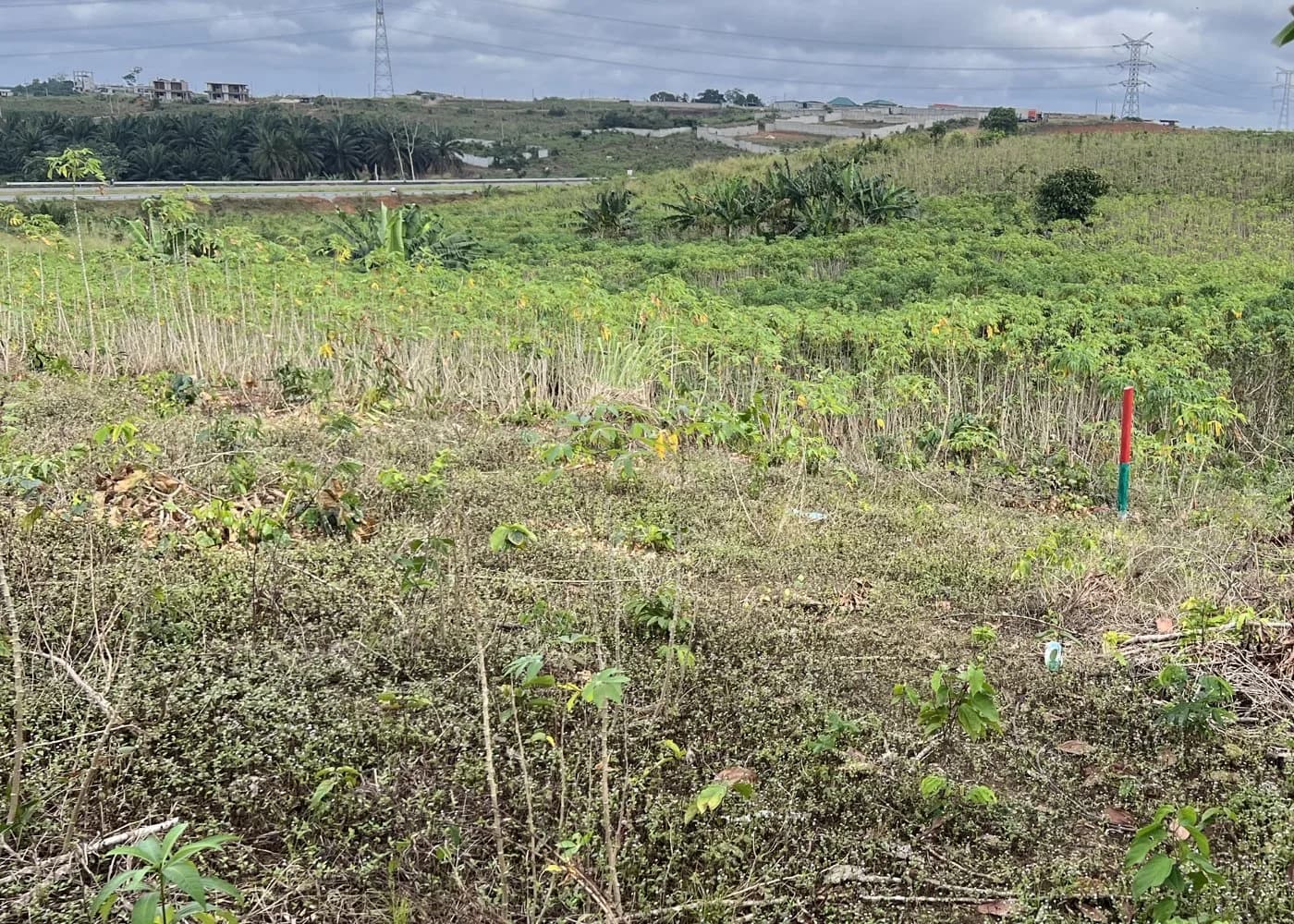
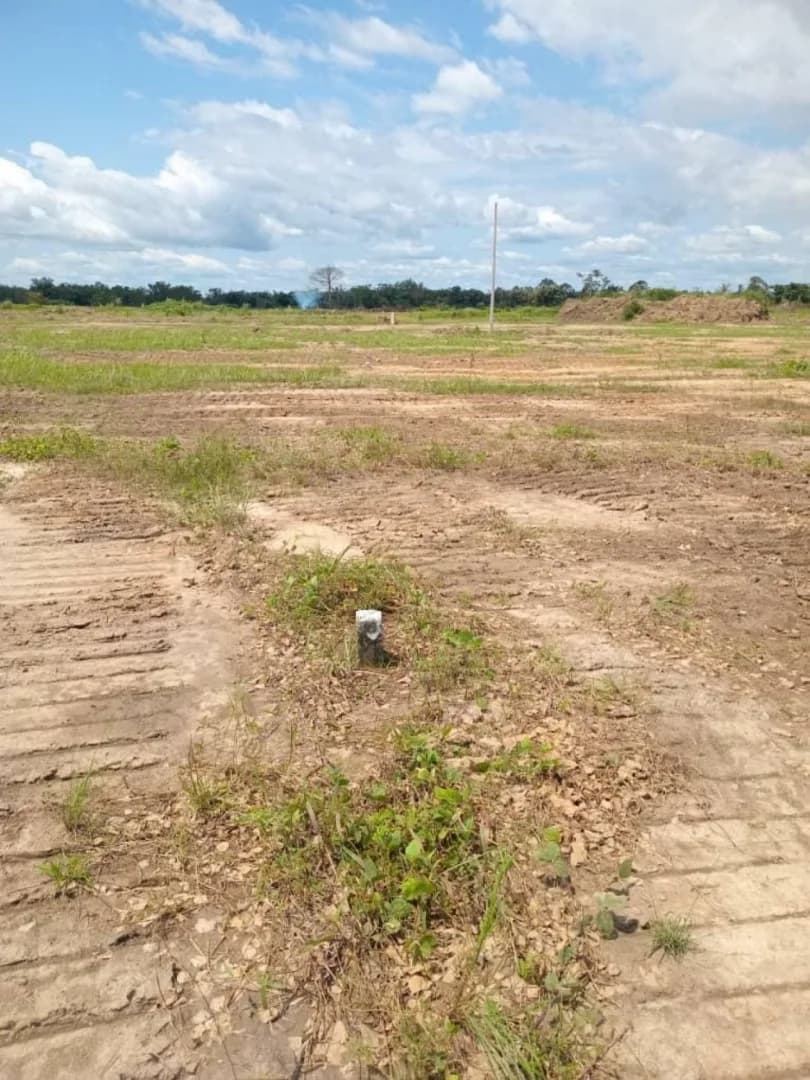
An on-site inspection with a chartered surveyor registered with the OGECI (Ordre des Géomètres-Experts de Côte d'Ivoire, the national order of chartered surveyors) confirms that the official boundary markers are in place and match the cadastral plan. It also reveals what no document will tell you: occupation by third parties (a building, a fence, crops), or an actual surface area that differs from the declared one.
Expect to pay 150,000 to 500,000 FCFA depending on the plot and its location.
A "topographer" who is not registered with the OGECI cannot produce a legally enforceable boundary survey report.
Warning signs
Be on your guard if:
- the seller refuses to show the original TF;
- the price is abnormally low for the area;
- the seller creates a sense of urgency ("another buyer is interested");
- no boundary markers are visible on the plot;
- the name on the TF does not match the seller, and no CMPF explains the discrepancy;
- the seller refuses to go through a notary;
- the reference numbers on the documents cannot be verified anywhere.
Summary: verification costs
| Check | Cost |
|---|---|
| Land registry certificate | 3,000 FCFA |
| State land status report (plot not yet registered) | 5,000 FCFA |
| Online IDUFCI check | Free |
| OGECI chartered surveyor | 150,000 to 500,000 FCFA |
| Notary | Variable (fees) |
| Estimated total | ~160,000 to 510,000 FCFA |
Compared with the price of a plot, the expense is modest. Compared with the cost of a legal dispute that drags on for years, it is not even a question.
Official sources:
- servicepublic.gouv.ci: land registry certificate, state land status report, CMPF
- dgi.gouv.ci: Conservation Foncière
- idufci.construction.gouv.ci: IDUFCI and SIGFU
- construction.gouv.ci: MCLU, subdivisions
- Ordinance No. 2013-481: urban land tenure
- Decree No. 2019-221: IDUFCI
- Decree No. 2021-862: SIGFU
- Organic Law No. 2020-968 of 17 December 2020 (Council of State), which repealed Law No. 2018-978
Further reading:
- ACD vs Land Title: the difference
- Checklist: 10 documents to verify
- The 5 pitfalls to avoid in Abidjan
- The role of the chartered surveyor
Official timeframe: according to Ivorian administrative texts, 180 calendar days at the MCLU for an ACD on an approved subdivision (BÂTIR No. 004, 2022), excluding processing at the tax authorities. In practice, the total time experienced is often longer. Note: the Land Title is created by the Conservation de la Propriété Foncière during the ACD procedure (official step 3), not after it. The ACD published in the Land Register is the published TF.
?Frequently asked questions
Can a land title be verified online?+
The IDUFCI can be checked online at idufci.construction.gouv.ci. The land registry certificate, however, must still be obtained from the Conservation Foncière: you need to go in person or use an authorised representative.
How much does a full verification cost?+
Between 160,000 and 510,000 FCFA (land registry certificate, surveyor, notary fees). That is little compared with a dispute that runs into millions.
Can a TF be cancelled?+
No, except for correction of a clerical error (an error in the name or surface area). The TF is imprescriptible once published in the Land Register (Urban Planning Code (Law No. 2020-624)). A TF obtained through fraud can, however, be challenged in court (Organic Law No. 2020-968, which repealed Law No. 2018-978).
What if the seller refuses to allow verification?+
Do not sign. A seller who refuses to let you verify their documents has already told you the essential thing: something is wrong.
Can a notary make a mistake?+
It is rare. The notary takes on personal and professional liability. Choose a notary registered with the Chamber of Notaries of Ivory Coast (Chambre des Notaires) and check their credentials.