Chargement...
Chargement...

Land scams are frequent in Abidjan. Here are the warning signs and the concrete checks to run before you sign, so you can protect your investment.
Need a land expert?
Speak with an advisor for free. Response within 2 hours.
We hear this kind of story often. A plot sold twice. A false owner carrying genuine papers that were stolen. A middleman who disappears once the deposit is paid. The Abidjan land market is dynamic, and that is precisely why it attracts fraudsters.
A word of vocabulary before we go into detail. The ACD, or Arrêté de Concession Définitive (Definitive Concession Decree), is the administrative act by which the State grants ownership of an urban plot. The Titre Foncier, or TF (Land Title), is that same right once it has been recorded in the Land Register by the Conservation de la Propriété Foncière et des Hypothèques (CPFH, the Land Registry and Mortgages Office). As for the MCLU, it is the Ministry of Construction, Housing and Urban Planning, which runs the procedure on the construction side.
Here are the five most common frauds. And, above all, the concrete checks that expose them before the deed is signed.
Someone introduces himself as the owner of a plot that is not his. He has documents, sometimes genuine ones that were stolen, sometimes convincing forgeries. The buyer, often in a hurry or purchasing from abroad (the diaspora), does not check with the Conservation Foncière (the land registry office) whether the name on the title matches the person sitting in front of him.
The seller collects three deposits from three different buyers. Each of them believes he is the sole purchaser. The problem surfaces at registration with the notary: only the first buyer registered is recognised. The others lose their money.
This scheme was made possible by the historical absence of a centralised register. The SIGFU, or Système Intégré de Gestion du Foncier Urbain (Integrated Urban Land Management System), changes that: as soon as a transaction is recorded against an IDUFCI (Decree No. 2019-221), the system automatically blocks any competing entry on the same parcel.
Counterfeit ACDs, land titles photocopied with a new name on them, fabricated boundary survey reports. Some forgeries are hard to tell apart from an original with the naked eye. A diaspora investor showed us an ACD he had bought for 8 million FCFA. The document looked perfect. Except that the decree number did not exist at the ministry.
Each document is verified with the body that issued it:
| Document | Where to check |
|---|---|
| ACD | MCLU, Guichet Unique du Foncier et de l'Habitat (GUFH, the single window for land and housing), tel. 27 20 21 74 78, or [construction.gouv.ci](https://www.construction.gouv.ci) |
| Titre Foncier | Conservation Foncière ([dgi.gouv.ci](https://www.dgi.gouv.ci)) |
| PV de bornage (boundary survey report) | Ordre des Géomètres-Experts (OGECI), the Ivorian body of chartered land surveyors |
| Lotissement (subdivision) | MCLU subdivision database (records since 1960) |
Never rely on copies: ask for the originals, or for certified true copies.
He has a good suit, a WhatsApp number, and photographs of plots. You pay a deposit. He vanishes. His number stops answering. This profile has no physical office, no company registration, and no legal existence you can verify.
A self-styled "aménageur" (site developer) cuts roads with a bulldozer, numbers the lots, prints a professional-looking plan, and sells parcels. But the subdivision holds no approval order from the MCLU. The plots being sold have no legal existence: no ACD will ever be obtainable for them.
Source: construction.gouv.ci, subdivision database, records since 1960.
Here are the situations that should put you on alert, even when the file looks clean.
Artificial urgency comes first: "another buyer is interested, you have to decide today". A good plot does not disappear in 24 hours. Then comes refusal of the notary, when the seller tries every possible way to avoid the authenticated deed. Payment in cash follows the same reflex: you are asked to pay in banknotes, leaving nothing traceable.
A price clearly below the local market deserves the same caution, because it almost always conceals a problem with the title, with access, or with occupation. Refusal of a site visit belongs on the list: there is always a reason not to let you see the parcel physically. And finally, documents without official seals, without stamps, without signatures, and without reference numbers you can verify.
Official sources:
Going further:
It is difficult, but not impossible. A criminal complaint opens the way to a civil claim for restitution. The faster you act and the stronger your evidence (receipts, transfers, documents), the better your chances are. A specialist lawyer is indispensable.
For plots already recorded, yes: the block is automatic (Decree No. 2019-221). But not every parcel is in the system yet. Check on idufci.construction.gouv.ci.
A serious professional has a verifiable RCCM, a physical office, accepts going through a notary, and never rushes you. A fraudster demands cash, refuses verification, and manufactures a sense of urgency.
Découvrez les terrains que Capital Foncier a vérifiés : titre publié, statut du lotissement contrôlé, et état domanial croisé.
The diaspora is a favoured target because it buys from a distance, is less familiar with official fees, and cannot always inspect the land physically. But residents of Ivory Coast (Côte d'Ivoire) are victims too.
Élargissez votre lecture avec d'autres facettes du foncier ivoirien.

Birth certificate extract, title deed, tax clearance, inheritance judgment: the real list of documents an Ivorian notary firm requires for a real estate sale, explained item by item, and what it means for a diaspora buyer.
Lire l'article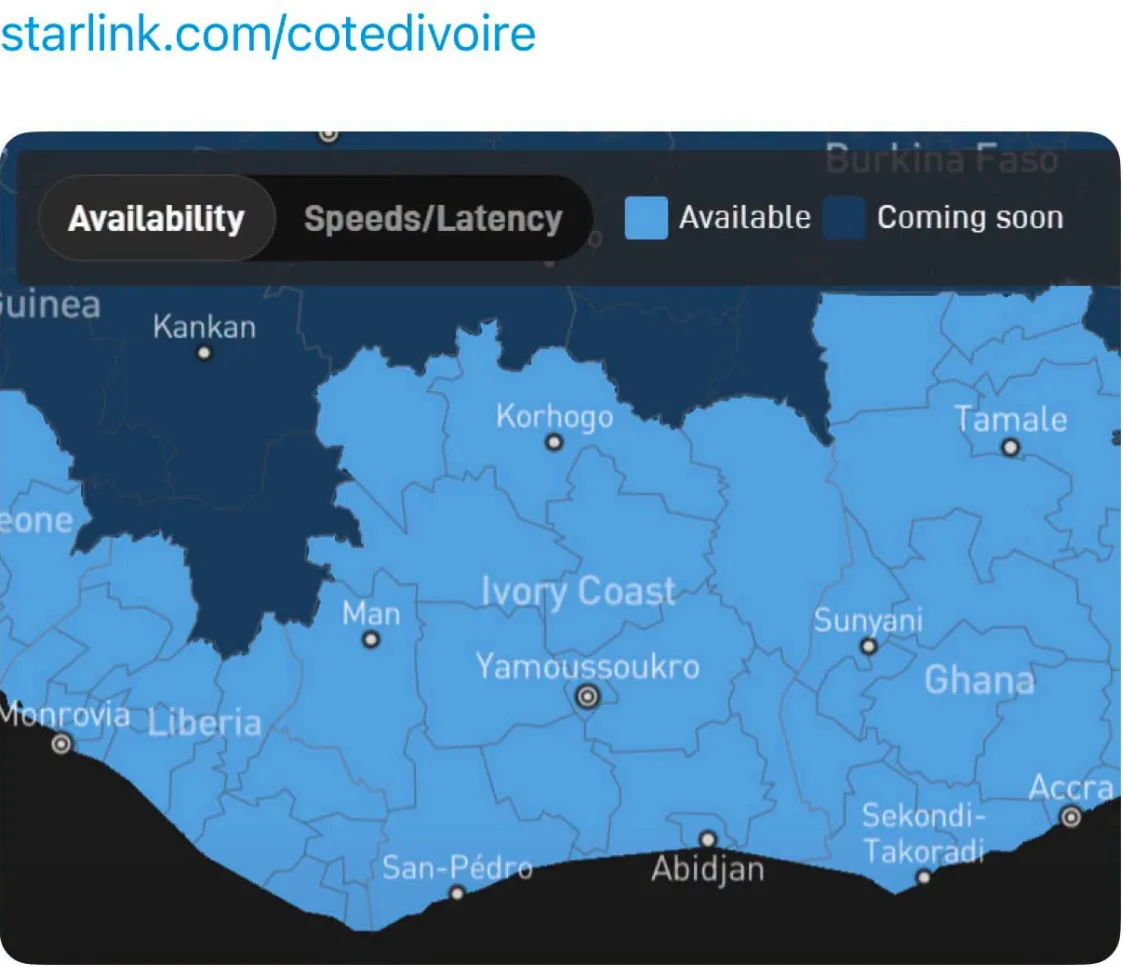
Starlink is now available for order in Ivory Coast. Kit and subscription pricing, coverage map, and an honest comparison with CanalBox, Orange, and Moov fiber. How connectivity is changing land value.
Lire l'article
A real notarial invoice from Songon Audoin (500 m² at 15,000 FCFA/m²): 1,462,275 FCFA in fees for 7,500,000 FCFA of land, or 19.5%. A line-by-line breakdown, with every amount cross-checked against official regulations, and what this levy reveals about the development of unserviced areas.
Lire l'article