Vacant Land in Urban Areas: What Taxes Apply in 2026?

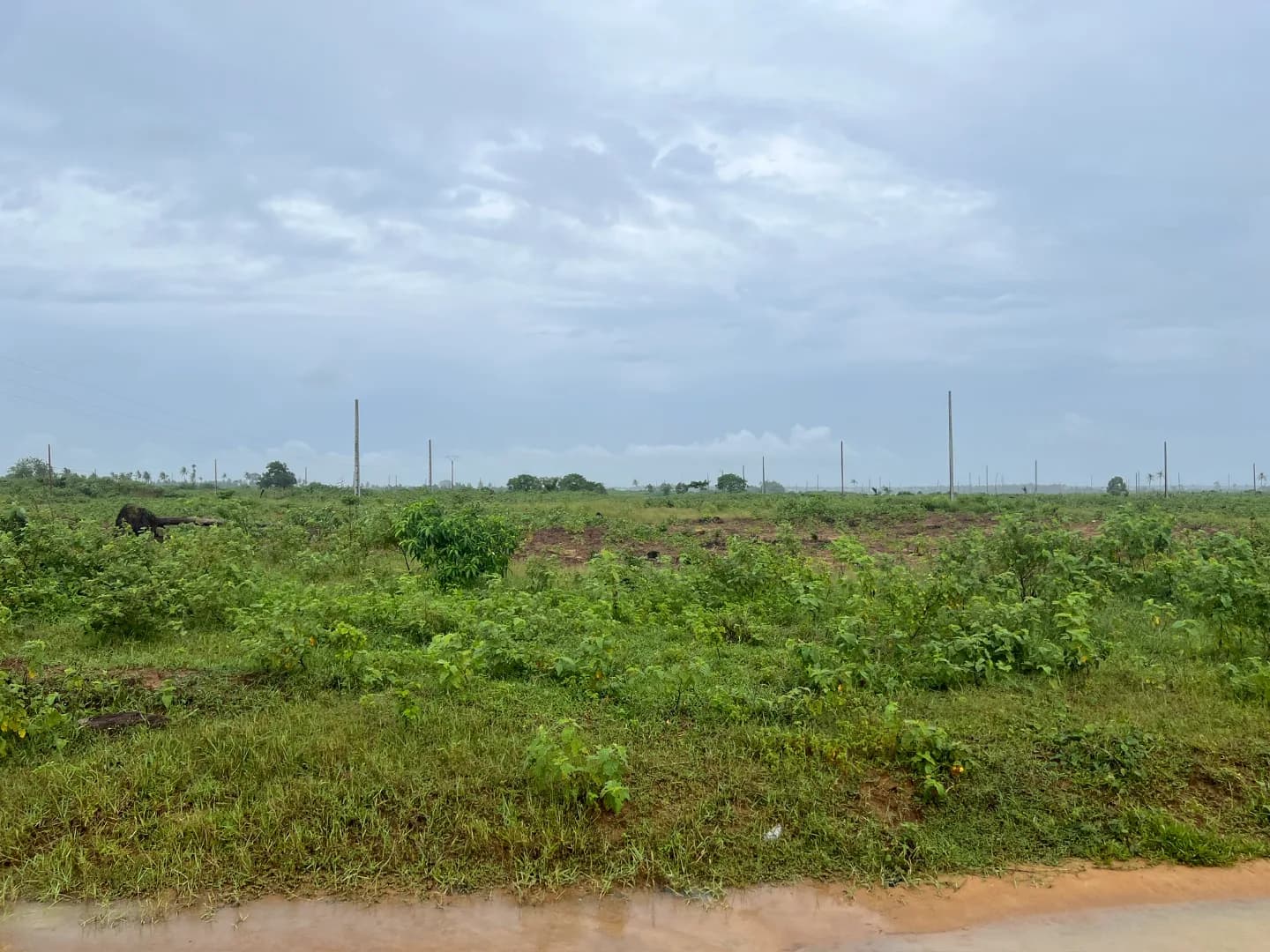
Do you own or plan to buy undeveloped land in Abidjan or another urban area? Here is everything you need to know about the taxation of unbuilt land: rates, exemptions, and strategies to optimise your investment.
Need a land expert?
Speak with an advisor for free. Response within 2 hours.
A Reworked Tax Regime Designed to Encourage Development
The 2025 and 2026 tax annexes have thoroughly reworked the taxation of vacant land in urban areas. Ivorian lawmakers are pursuing two goals: curbing speculation by taxing unoccupied land, and easing the burden on buyers who develop their plots.
If you own or are considering buying vacant urban land in Ivory Coast (Côte d'Ivoire), here is what you need to know to plan for your tax burden.
The Property Tax (Impôt sur le Patrimoine Foncier, IPF): The Applicable Rate
Since the 2025 tax annex, vacant land in urban areas has been taxed at 1% of its market value. The rate applied until then was 1.5% of the assessed value.
Market Value: A Stable Tax Base
The market value is certified by the National Commission for Setting Real Estate Values and fixed for a three-year period. This point matters as much as the rate itself: your tax base is known in advance for three consecutive fiscal years.
Worked Examples
| Situation | Calculation | Annual IPF |
|---|---|---|
| 500 m² plot in Bingerville, market value 6,000,000 FCFA | 6,000,000 × 1% | 60,000 FCFA/year |
| 300 m² plot in Cocody, market value 15,000,000 FCFA | 15,000,000 × 1% | 150,000 FCFA/year |
| 600 m² plot in Songon, market value 3,000,000 FCFA | 3,000,000 × 1% | 30,000 FCFA/year |
Source: 2025 tax annex, dgi.gouv.ci
The Two-Year Exemption on New Acquisitions
Vacant urban land acquired from 2025 onwards is exempt from IPF for two years. This is the main incentive in the scheme.
What This Means in Practice
You pay nothing in the first year following the purchase, and nothing in the second. The 1% rate applies from the third year onwards.
These two tax-free fiscal years are meant for getting the development of the land under way: applying for the ACD (Arrêté de Concession Définitive, the definitive concession order), soil studies, and architectural plans.
Eligibility Condition
The exemption applies to new acquisitions. Land held before 2025 does not qualify.
The 25% Cap (2026 Tax Annex)
The 2026 tax annex added a further safeguard: your IPF cannot increase by more than 25% compared with 2024, with a minimum of 10%. This cap shields owners from a sudden reassessment of the market value.
If you paid 200,000 FCFA in IPF in 2024, your 2026 IPF will therefore not exceed 250,000 FCFA, even if the market value of your property has been revised upwards.
Source: 2026 tax annex
Rural Land: A Different Regime
In rural areas, the tax logic is different. Plots used for subsistence farming or held under customary rights bear an almost non-existent tax burden.
Agro-industrial operations, on the other hand, are taxed per hectare depending on the crop:
| Crop | Annual rate/hectare (FCFA) |
|---|---|
| Bananas, pineapples, flowers | 7,500 |
| Sugar cane | 5,000 |
| Oil palm, rubber, coconut | 2,500 |
The two regimes never overlap: rural land falls under Law No. 98-750, urban land under the Urban Planning Code. For more detail: Rural Land Certificate
The Reduced Rate for a Primary Residence
If you build on your vacant land and the home becomes your primary residence, the IPF rate drops to 0.5%, instead of the standard rate calculated on the rental value. It can be combined with the 5% tax credit granted for a first home under the 2026 tax annex.
The Anti-Speculation Logic
Lawmakers are using taxation to free up the supply of land. By taxing idle plots at 1% of their market value, they push owners to build or sell. The stated goal is to limit speculative land hoarding and to densify areas that already have infrastructure in place.
The exemption granted to new acquisitions opens a clear window for action: two years without any tax burden to launch your project.
Strategy for Investors
- Acquire and plan your project during the two-year exemption period, with no tax burden.
- Start the ACD procedure within that window. For an individual: 100,000 FCFA per lot, 1,000 FCFA in filing fees, and 50,000 FCFA for issuance (servicepublic.gouv.ci).
- Include the IPF in your financial plan from the third year onwards, at 1% of the market value.
- If you build to live there, apply for the reduced 0.5% rate and the 5% first-home tax credit.
- Request a land registry status report (état domanial, 5,000 FCFA from the Ministry of Construction, Housing and Urban Planning, the MCLU) to confirm the status of your plot.
Sources:
- 2025 tax annex: exemption for vacant land, IPF rate
- 2026 tax annex: cap, tax credit, long-term leasehold
- dgi.gouv.ci, Directorate General of Taxes (DGI)
- servicepublic.gouv.ci, ACD costs
Further reading:
?Frequently asked questions
When do I have to start paying IPF on vacant land?+
If you acquired the land from 2025 onwards, you benefit from a two-year exemption. IPF is due from the third year, at a rate of 1% of the market value.
How is the market value determined?+
By the National Commission for Setting Real Estate Values, attached to the Directorate General of Taxes (Direction Générale des Impôts, DGI), at dgi.gouv.ci. It is fixed for three years, which makes your tax base predictable.
What happens if I do not pay the IPF?+
The DGI applies late-payment penalties. In cases of prolonged non-payment, tax enforcement proceedings can be initiated, including seizure of the property.
Does the two-year exemption apply to companies?+
Yes. It covers newly acquired vacant land, regardless of the buyer's profile: individual, company, or association.
Is a long-term leasehold (bail emphytéotique) subject to IPF?+
The leaseholder pays a reduced rate of 0.2% of the market value, compared with 1% for full ownership. This measure comes from the 2026 tax annex.