San Pedro, Yamoussoukro, Bouaké: Secondary Cities in the MCLU Figures, 2018-2023
Beyond Greater Abidjan, two Ivorian urban areas have their own Urban Master Plan (Schéma Directeur d'Urbanisme): Greater Yamoussoukro and Bouaké. San Pedro completes the trio of major cities outside Abidjan. Here is an analysis of their potential and the checks to carry out for a land project beyond Abidjan.
A question about a plot?
Send the first page of a document on WhatsApp: we tell you what it is, free of charge.
Key quotes
The statements below can be quoted independently. Every figure is tied to its dated official source.
- "Three Ivorian urban areas have a Master Urban Development Plan (Schéma Directeur d'Urbanisme): Greater Abidjan, Greater Yamoussoukro and Bouaké." (MCLU Statistical Yearbook 2018-2023, Table 12.)
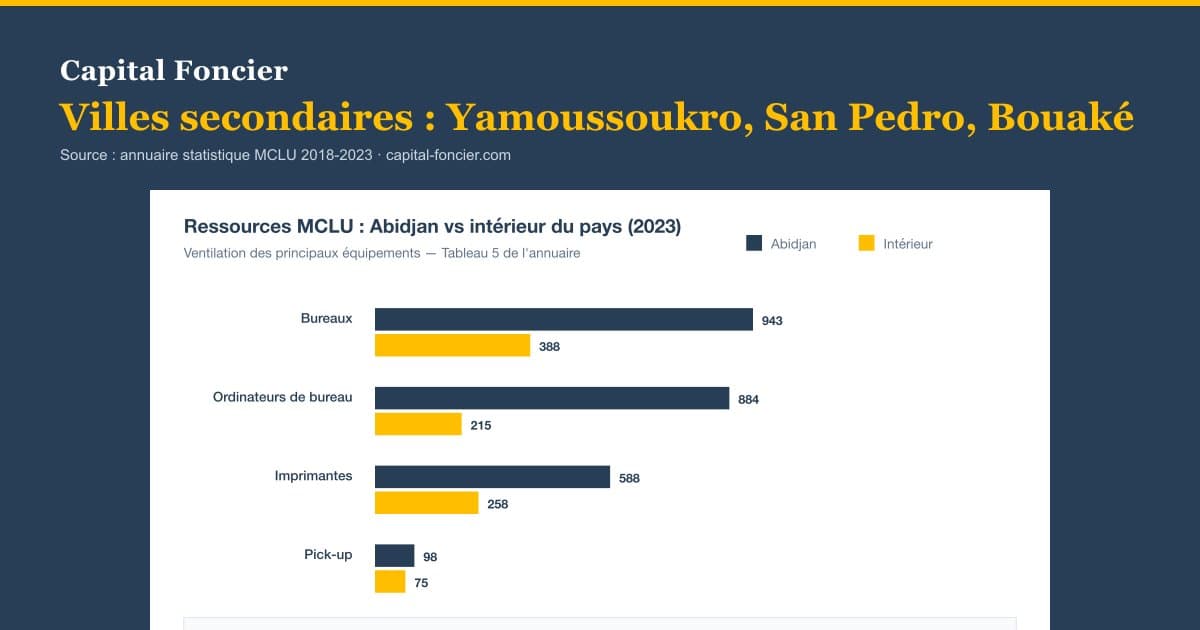
- "The MCLU operates 388 offices, 215 desktop computers and 75 pick-up trucks in the interior of the country (outside Abidjan) in 2023, that is 29% of its office network and 43% of its pick-up fleet." (MCLU Yearbook, Table 5.)
- "San Pedro, the second largest port in Ivory Coast (Côte d'Ivoire) and a regional capital, has an Urban Master Plan (Plan d'Urbanisme Directeur) in force." (MCLU Yearbook, Table 13.)
In brief
The 2018-2023 statistical yearbook of the MCLU, the Ministry of Construction, Housing and Urban Planning, identifies three urban areas outside Abidjan with a Master Urban Development Plan (SDU): Greater Yamoussoukro, the political capital; Bouaké, the country's second largest city; and San Pedro through its regional capital, the second largest port and the outlet of the cocoa industry. Each has its own land market profile. All three share an enforceable planning framework, a growing administrative presence and prices per square metre generally lower than in Abidjan. For the diaspora and buyers seeking to diversify, these are serious alternatives, provided the documentary verification is carried through to the end.
Key figures: secondary cities in the MCLU yearbook
| City | Region | Planning status | PUD/SDU |
|---|---|---|---|
| Greater Yamoussoukro | Autonomous district | Political capital | SDU + PUD |
| Bouaké | Gbêkê | 2nd largest city | SDU + PUD |
| San Pedro | San Pedro | Regional capital, port | PUD |
| For reference: Abidjan | Autonomous district | 1st city, 97% urbanised | SDU + PUD |
Source: MCLU Yearbook 2018-2023, Tables 12 and 13.
MCLU resources: Abidjan and the interior of the country in 2023
| Category | Abidjan | Interior | Interior share |
|---|---|---|---|
| Offices | 943 | 388 | 29% |
| Desktop computers | 884 | 215 | 20% |
| Pick-up trucks | 98 | 75 | 43% |
| Printers | 588 | 258 | 30% |
Source: MCLU Yearbook, Table 5.
Are you targeting a project in San Pedro, Yamoussoukro or Bouaké? A Capital Foncier advisor will verify the precise situation of the area. Get my assessment.
Why look beyond Abidjan (sometimes)?
Abidjan has urbanised 97% of its territory and concentrates most of the national demand for land. Yet Greater Abidjan is not the only option. Three reasons argue for looking at secondary cities.
- Prices per square metre are structurally lower there. For equivalent zoning, buying in Bouaké or Yamoussoukro costs significantly less than in Cocody or Riviera.
- Planning is now documented. Greater Yamoussoukro and Bouaké have an SDU drawn up under the same methodological framework as Abidjan, and San Pedro has a PUD.
- Decentralised administrations are getting stronger. In 2023, the interior of the country holds 29% of the MCLU's offices and 43% of its pick-up trucks: an administration going out into the field.
Caution: a less pressured land market potentially offers more choice, but it requires the same standards of documentary verification. Moving beyond Abidjan is not a shortcut; it is a trade-off that must be justified by a serious analysis of the area.
Greater Yamoussoukro: the political capital with an SDU
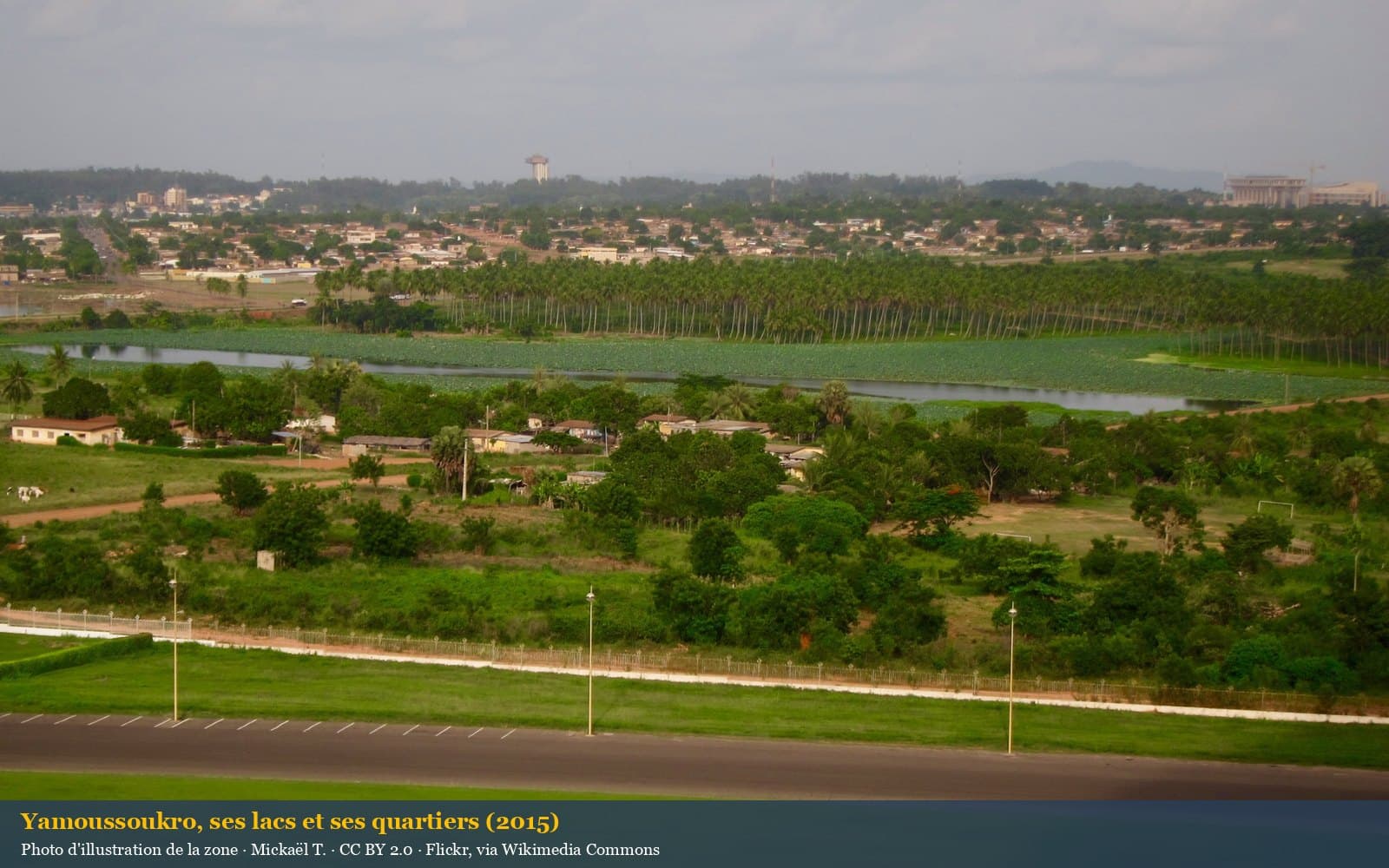
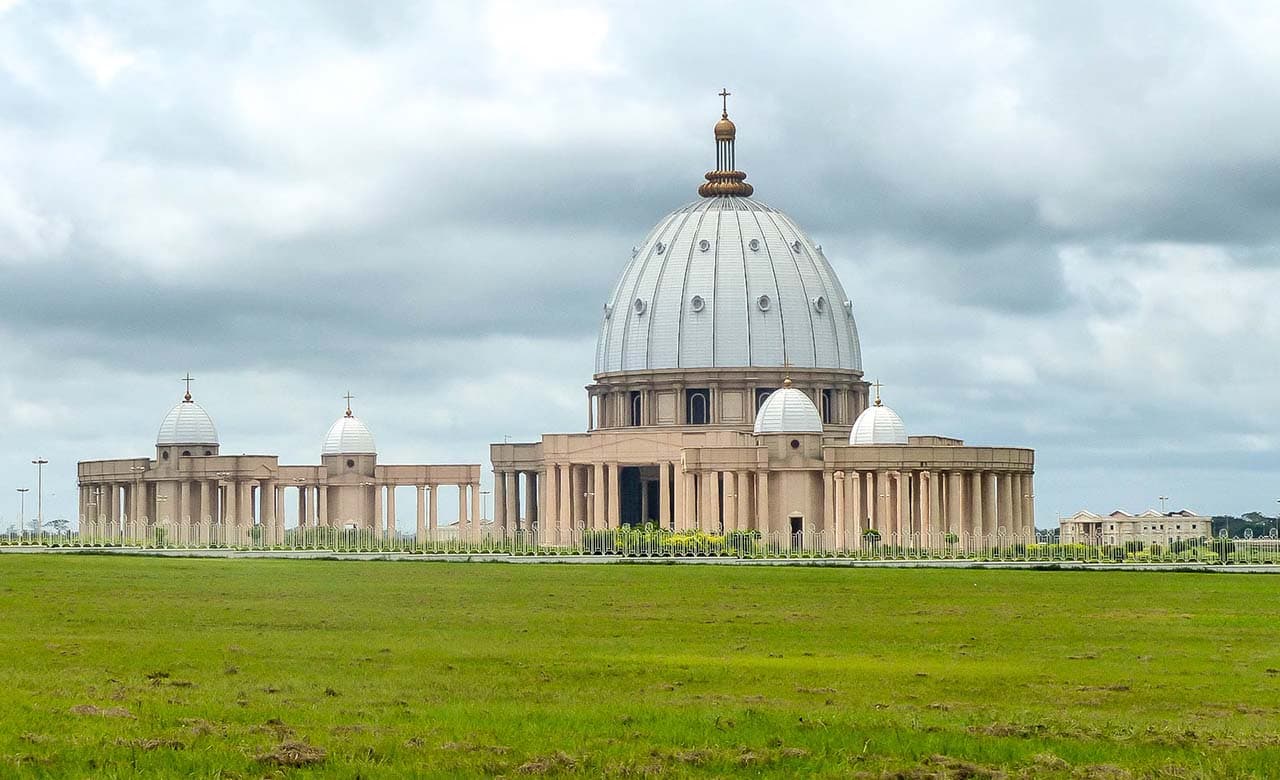
Yamoussoukro is the political capital of Ivory Coast. Greater Yamoussoukro has a Master Urban Development Plan, supplemented by an active PUD, which structures the development of the urban area over the medium and long term.
The local fabric remains administrative and institutional, driven by large-scale public projects in infrastructure and public facilities. Prices there are significantly lower than in Abidjan for equivalent zoning. Demand comes from civil servants and executives for residential property, from government departments for official housing, and from investors positioning themselves for the long term.
Points requiring vigilance:
- The rental market is narrower than in Abidjan. A rental project must be calibrated to actual demand.
- The servicing of peripheral plots (utilities and access) varies greatly from one area to another.
- Some older subdivisions are still being regularised. This must be checked before any commitment.
Bouaké: the second largest city, with an updated SDU
Bouaké is the country's second largest urban area and the capital of the Gbêkê region. After the slowdown linked to the political crisis Ivory Coast experienced in the early 2000s, the city has resumed a dynamic of growth and urban renewal. Its SDU has been updated to support this transformation, and a PUD is also active there.
A crossroads city between the North and the South, Bouaké relies on a diversified economy: trade, transport and agri-food. Prices there remain more accessible than in Yamoussoukro in many areas. Demand is residential, commercial along the main roads, and light industrial.
Points requiring vigilance:
- Some areas underwent zoning changes during the SDU revision. The version currently in force must be consulted.
- Older plots may carry post-crisis histories that call for particular verification of titles.
- The administrative process there is faster than in departmental capitals that do not have a PUD.
San Pedro: the second largest port and the cocoa engine
San Pedro is the capital of the region of the same name and the second largest port in Ivory Coast. Its economy is organised around the port, which exports cocoa, timber and fruit, and an active agri-food sector. According to the MCLU yearbook, the city has a PUD being drawn up or revised.
Urban expansion there is pronounced, population growth is strong, and international economic players have set up operations. Prices are rising along the premium corridors, the seafront, the areas around the port and the business districts, but remain accessible on the outskirts. Demand comes from port and cocoa industry executives for residential property, from hotels and services for the commercial sector, and from rental-focused investors.
Points requiring vigilance:
- Land pressure on certain central corridors is high.
- Rapidly expanding areas may present servicing challenges: water, electricity, sanitation.
- The distinction between urban and rural zones is particularly sensitive on the outskirts, because the applicable legal regime differs.
The 29 other regional capitals
Beyond these three hubs, 28 other regional capitals have a PUD being drawn up or revised. The 29th, Toumodi, remains the exception according to the yearbook. These cities cover very different profiles:
- High-growth regional cities: Daloa (Haut-Sassandra), Korhogo (Poro), Man (Tonkpi), Abengourou (Indénié-Djuablin), Gagnoa (Gôh).
- Intermediate administrative cities: Odienné (Kabadougou), Divo (Loh-Djiboua), Dimbokro (N'Zi), Bondoukou (Gontougo).
- Tourist or specialised cities: Sassandra (Gbôklè), Agboville (Agnéby-Tiassa), Dabou (Grands Ponts).
In each of them, the existence of a PUD is an asset. But market depth and operating conditions vary greatly from one city to another. A project in a regional capital deserves a specific analysis of the area before any decision.
For the diaspora: how to choose between Abidjan and the secondary cities
Three criteria help settle the question.
- The nature of the project. A purely rental project will find a deeper market in Abidjan, where the urban rental market counts 1.8 million households (see our article on housing occupancy). A residential or retirement project can make perfect sense in Yamoussoukro or Bouaké.
- The budget. For an equivalent budget, Abidjan limits you to a small plot on the outskirts, whereas a secondary city opens up a more spacious plot in a better-equipped area.
- Family or professional roots. A project located in the family's region of origin, or in a city where a relative can carry out regular follow-up, reduces the operational risk of investing from a distance.
For individual buyers: the specific reflexes outside Abidjan
Four checks are essential before buying outside the capital.
- Verify the existence and current version of the PUD or SDU. These documents may have been revised recently.
- Check the local presence of the MCLU. Regional directorates and decentralised services are increasingly well equipped: 388 offices and 75 pick-up trucks recorded in the interior of the country.
- Rely on formal local professionals. Notaries, licensed chartered surveyors, law firms: the markers of professionalism remain the same as in Abidjan, even if the supply is more limited.
- Do not underestimate servicing costs. In peripheral areas, access to water, electricity and roads represents a significant cost, often poorly estimated upfront.
Capital Foncier's takeaways
Our reading:
- Secondary cities with an SDU or a PUD are credible alternatives to Abidjan. They offer a comparable planning framework at different prices.
- The land administration is going out into the field. The interior of the country now holds 29% of the MCLU's offices and 43% of its pick-up trucks, compared with 20% of its computers and 30% of its printers.
- The balance between security and price also plays out beyond Abidjan. For a given budget, a project outside the capital can offer a better ratio of legal security to land quality, provided the area is verified precisely.
Further reading
- Urbanisation map: 5.6 million households
- Urban Master Plans: 74 out of 111 administrative capitals covered
- MCLU in figures: the rise of the land administration state
- Housing deficit: 827,753 units to build
Securing your land project
Hesitating between Abidjan and a secondary city? A Capital Foncier advisor will run the comparison with you: local PUD, prices, servicing, administrative procedures.
Get my free assessment: 2 minutes to describe your project.
Sources
- MCLU Statistical Yearbook 2018-2023, Tables 5, 12, 13
- Law No. 2020-624 of 14 August 2020 on the Urban Planning and Urban Land Code
- National Institute of Statistics (INS), RGPH 2021
- Directorate of Urban Planning and Urban Development (DUDU), MCLU
About this article
Article written by the Capital Foncier team based on the MCLU statistical yearbook 2018-2023. First published: 11 May 2026. This article is intended for educational purposes. It constitutes neither legal advice nor personalised investment advice.
The Capital Foncier team (Abidjan, Ivory Coast)
"Our mission is to secure every square metre purchased by our investors."
?Frequently asked questions
Is a plot in Yamoussoukro cheaper than in Abidjan?+
On average yes, for equivalent zoning. But everything depends on the exact area, the servicing, the legal status and the type of subdivision. A serious comparison requires a plot-by-plot analysis.
Is San Pedro a suitable city for rental investment?+
Potentially, particularly for properties targeting port and cocoa industry executives. But the rental market there is more cyclical than in Abidjan, linked to fluctuations in the cocoa economy. An analysis of local rental demand is essential before any commitment.
Has Bouaké caught up after the crisis?+
The MCLU yearbook places Bouaké among the three major urban areas with an SDU, alongside Abidjan and Yamoussoukro. The city is in a phase of active urban renewal, and its updated SDU supports this momentum.
Is it better to invest on the outskirts of Abidjan or in a secondary city?+
It is a matter of personal trade-offs. The outskirts of Abidjan (Bingerville, Songon, Anyama) benefit from the metropolitan momentum, but at already significant prices. A secondary city offers more space for an often lower price, with a more limited rental market depth.
Is the MCLU really present in the interior of the country?+
The yearbook documents 388 offices, 215 desktop computers, 258 printers and 75 pick-up trucks in the interior of the country (outside Abidjan) in 2023. This presence is growing, even if it remains asymmetrical compared with the capital, which counts 943 offices and 884 computers.